Why Environmental Product Declarations Matter in Infrastructure Construction
Sustainability expectations across the built environment are increasing rapidly. Infrastructure owners, developers, engineers and contractors are now expected to demonstrate the environmental performance of the materials and systems used across their projects.
As a result, Environmental Product Declarations (EPDs) are becoming an increasingly important part of product specification in sectors including rail, water, utilities, data centres and large-scale construction.
Following Relinea’s recent announcement that we have achieved an Environmental Product Declaration for our GRP access platforms, it is worth exploring why EPDs are becoming so important for infrastructure projects and engineering specifications.
 Read more about our announcement here.
What Is an Environmental Product Declaration (EPD)?
An Environmental Product Declaration (EPD) is a verified document that provides transparent information about the environmental impact of a product across its entire lifecycle.
This includes:
- Raw material extraction
- Manufacturing processes
- Transportation
- Installation
- Operational lifespan
- End-of-life disposal or recycling
EPDs are based on Life Cycle Assessment (LCA) methodology and follow internationally recognised standards such as EN 15804, ensuring that environmental impacts are measured and reported consistently.
For engineers and specifiers, this provides reliable, comparable data when evaluating products during design and procurement.
Why EPDs Are Becoming Essential in Infrastructure Projects
Across the infrastructure sector, sustainability targets are becoming more stringent. Governments, asset owners and developers are introducing policies designed to reduce embodied carbon and lifecycle environmental impacts.
This shift is particularly visible in industries such as:
- Rail infrastructure
- Water and wastewater treatment
- Utilities and energy networks
- Data centre construction
- Major commercial and industrial developments
For these projects, product selection is no longer based solely on structural performance or cost. Increasingly, specifiers must also consider verified environmental performance data.
EPDs provide the data needed to support these decisions.
Supporting Whole Life Carbon Assessments
Whole Life Carbon Assessments (WLCAs) are now widely used to evaluate the environmental impact of infrastructure and construction projects.
These assessments consider carbon emissions and environmental impacts across the full lifecycle of a project, including materials, construction, operation, maintenance and end-of-life.
EPDs play a key role by providing independently verified environmental data for individual products, allowing project teams to accurately model and compare the environmental impact of different specification choices.
For engineers working on major infrastructure projects, this level of transparency is becoming increasingly important during both design development and procurement stages.
Increasing Demand in Procurement and Specification
Across public and private sector infrastructure projects, sustainability reporting requirements are becoming more common within tender documentation.
Contractors and manufacturers are increasingly asked to provide:
- Verified environmental product data
- Embodied carbon information
- Lifecycle environmental impact reporting
Products with EPDs offer a clear advantage during this process because they provide independently verified environmental transparency.
In some cases, EPDs are now required to support sustainability targets for major infrastructure frameworks or funding requirements.
For contractors and asset owners, specifying products with EPDs can help demonstrate alignment with wider environmental and carbon reduction commitments.
Supporting Sustainability Certifications
Environmental Product Declarations also support widely recognised sustainability certification schemes used across the built environment.
These include:
- BREEAM
- LEED
- DGNB
- Infrastructure sustainability frameworks
Projects targeting high sustainability ratings often benefit from specifying products that have verified environmental declarations.
This is particularly relevant for data centre developments, commercial construction projects and large infrastructure programmes, where environmental performance is closely monitored.
Why Environmental Transparency Matters for Infrastructure Products
Infrastructure assets are designed to operate for decades, often in challenging environments. Materials and systems must deliver long-term durability, safety and reliability.
However, modern infrastructure design must now also account for:
- Embodied carbon in materials
- Manufacturing environmental impact
- Maintenance and lifecycle performance
- End-of-life recycling or disposal
EPDs provide the structured data required to evaluate these factors.
For engineers specifying access platforms, walkways and structural components, this enables more informed decisions that balance technical performance, durability and environmental impact.
Relinea’s Commitment to Sustainable Infrastructure
At Relinea, our focus has always been on delivering high-performance access solutions designed for long-term infrastructure environments.
Our systems are widely used across sectors including:
- Rail infrastructure
- Water and wastewater facilities
- Utilities and energy sites
- Data centres and critical infrastructure
- Industrial and commercial construction
Achieving an Environmental Product Declaration for our GRP access platforms reflects our commitment to providing transparent environmental data and supporting more sustainable infrastructure design.
As sustainability expectations continue to grow across the built environment, EPDs will play an increasingly important role in helping engineers, contractors and asset owners make informed specification decisions.
Relinea Achieves EPD for GRP Access Platforms
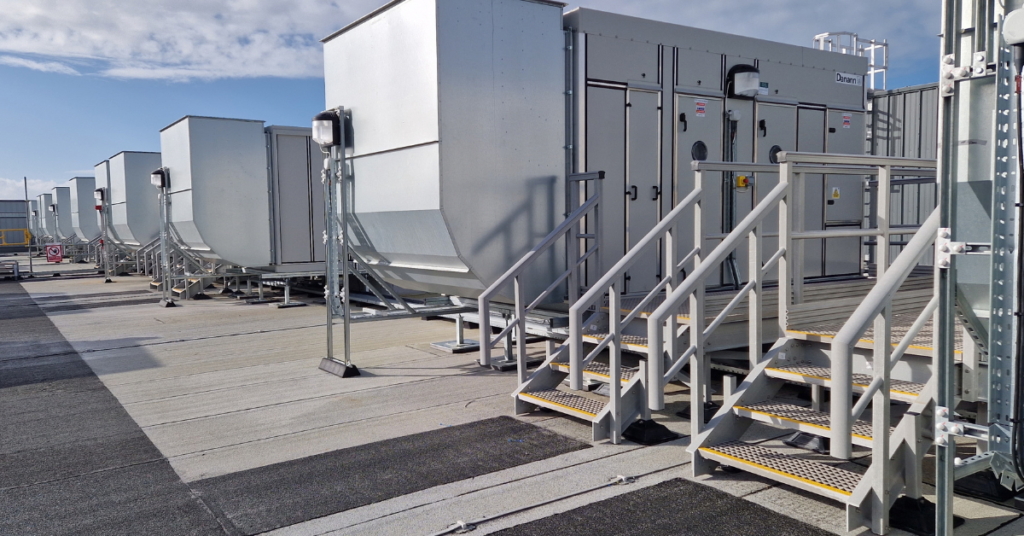
GRP Access Platforms