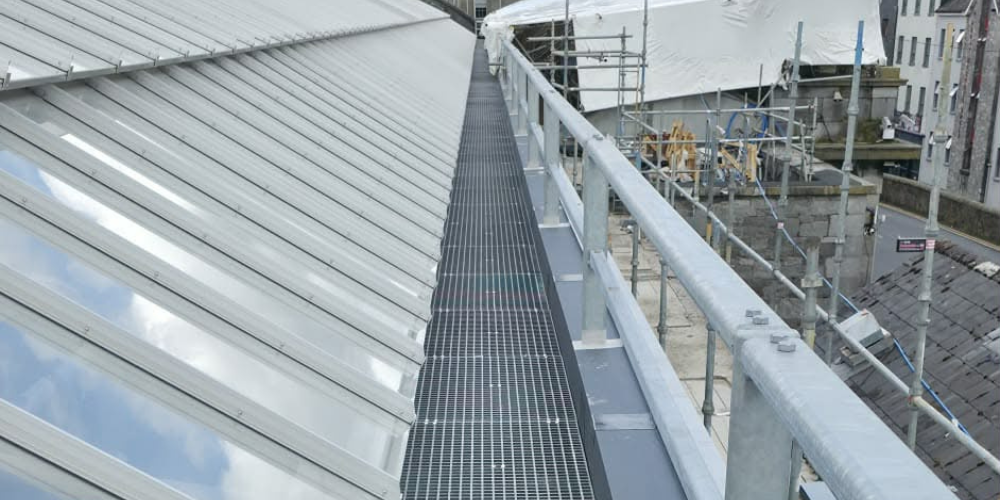
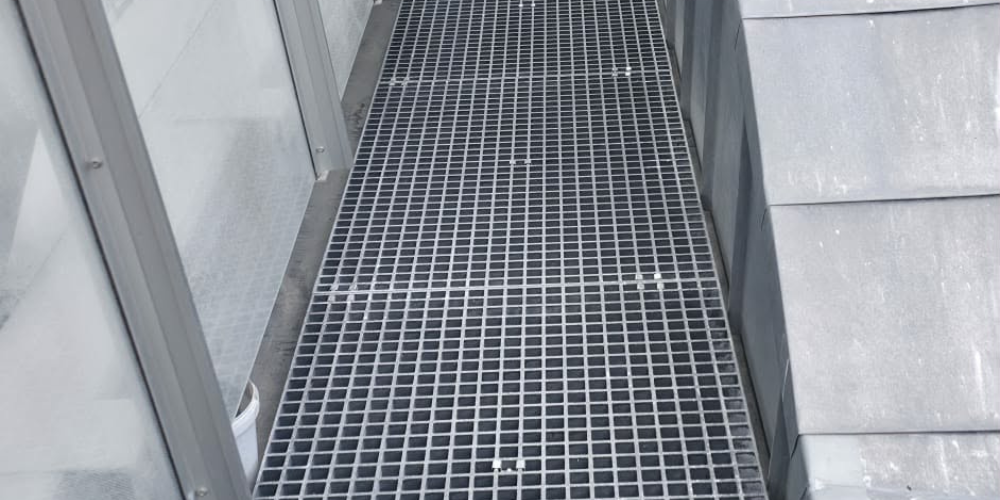
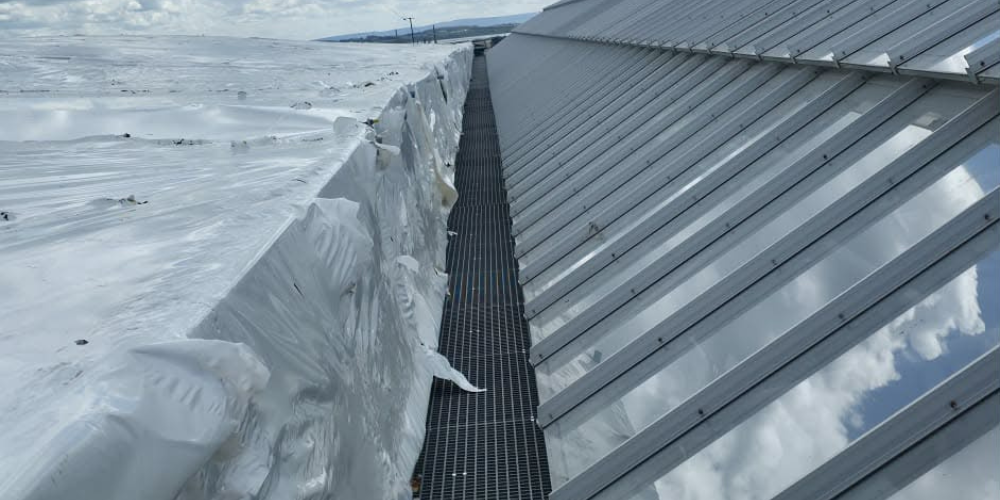
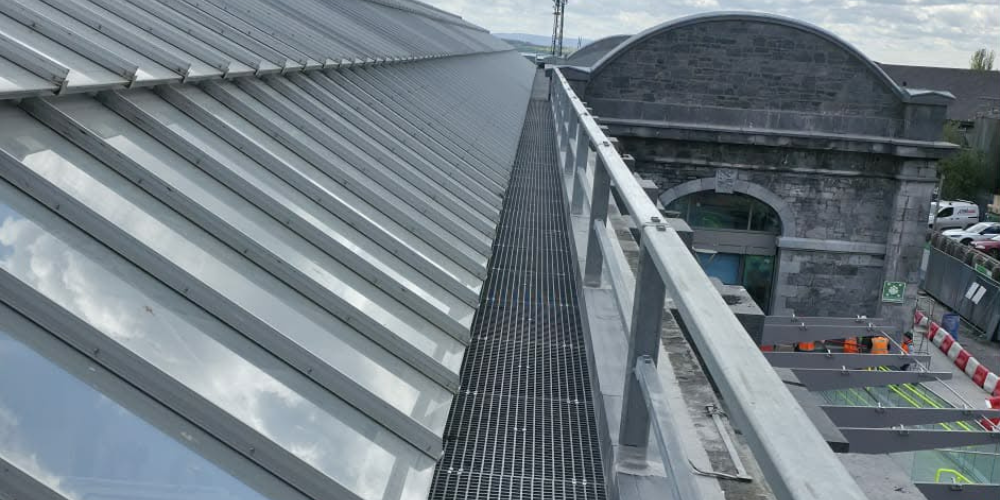
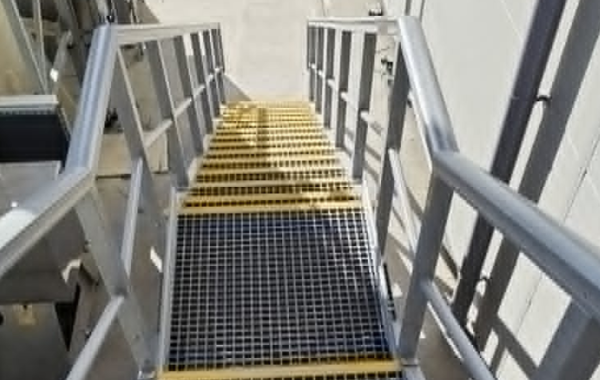
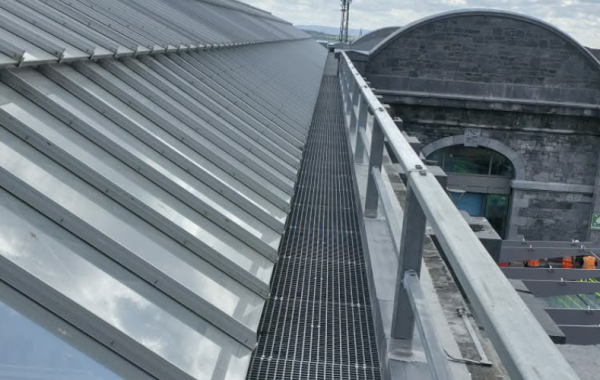
Ceannt Station, a landmark railway hub dating back to 1851, is undergoing a major redevelopment to restore its historic character while meeting modern transport demands. A new curved glazed roof, echoing the original Victorian design, forms the centrepiece of the upgrade. Our role involved delivering 233 metres of GRP walkways to provide safe, durable access across the roof structure.
Despite its historical importance, Ceannt Station’s original buildings and infrastructure had significantly deteriorated over time. Decades of wear, combined with evolving transport demands, left the station unable to effectively serve the needs of a modern urban population. Any redevelopment effort therefore had to address both functional limitations and conservation sensitivities.
One of the key architectural challenges lay in the construction of the new glazed roof. While visually inspired by the station’s Victorian past, the structure required modern engineering solutions to ensure safety, longevity, and performance. Introducing additional elements, such as maintenance walkways, posed a particular difficulty. These systems needed to integrate seamlessly with the new roof design without placing excessive load on the structure or compromising its aesthetic integrity.
At the same time, safety and accessibility for maintenance teams were essential considerations. The roof environment would be exposed to weather conditions year-round, requiring materials that could withstand corrosion, provide secure footing, and demand minimal upkeep over time. Balancing these practical requirements with the sensitivities of a heritage redevelopment created a complex design brief.
Solution
To address these challenges, GRP was selected as the material for the roof walkways, offering a highly effective combination of performance, safety, and compatibility with the project’s constraints. Its lightweight properties were particularly advantageous, significantly reducing the structural load imposed on the newly constructed roof, an important factor in preserving both the integrity and longevity of the building.
Despite being lightweight, GRP delivers excellent strength and durability, ensuring the walkways can withstand regular use and environmental exposure. Its inherent resistance to corrosion makes it especially suitable for outdoor applications, where traditional materials might degrade over time. Additionally, its non-conductive nature adds an extra layer of safety in a railway environment.
From a usability perspective, the anti-slip surface of the GRP walkways enhances safety for maintenance personnel, even in wet or challenging conditions. This contributes to a safer working environment without requiring additional surface treatments or modifications. Furthermore, the material’s low maintenance requirements help reduce long-term operational costs, aligning with the client’s goal of creating a sustainable and future-proof transport hub.
Ultimately, the integration of GRP walkways into the Ceannt Station redevelopment demonstrates how modern materials can play a vital role in preserving and enhancing historic infrastructure. By combining innovation with respect for the past, the project successfully bridges the gap between heritage conservation and contemporary performance standards.