GRP Sustainability – Relinea 2025 Sustainability Report
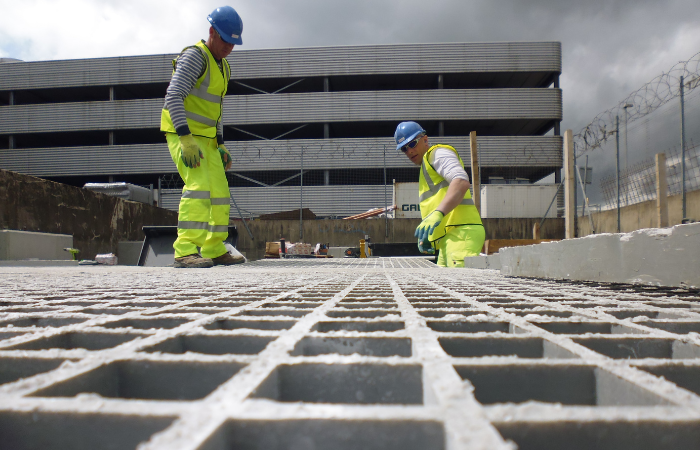
As the global push toward decarbonisation intensifies, industries are being challenged to think differently, rethinking materials, reducing waste, and reimagining what sustainable construction can truly look like. At Relinea, we believe that the key to meeting this challenge lies in Glass Reinforced Plastic (GRP): a high performance, eco friendly alternative to traditional building materials like steel, concrete, and wood.
Our 2025 Sustainability Report offers a detailed look at how GRP is not only transforming the construction industry but also enabling organisations around the world to meet their climate goals, without compromising on performance, safety, or durability.
Built to Last, Engineered to Protect the Planet
GRP offers numerous structural and environmental benefits across every stage of its lifecycle, from raw material extraction to end-of-life processing. Here’s why GRP stands out:
✅ 47% Lower Lifecycle Carbon Emissions
GRP exhibits 47% less lifecycle CO₂ emissions compared to structural steel. Lifecycle emissions per square metre are as follows:
| Lifecycle Stage | GRP (kgCO₂e/m²) | Steel (kgCO₂e/m²) |
|---|---|---|
| Raw Materials | 6.5 | 11.5 |
| Manufacturing | 9 | 25 |
| Transportation | 1.2 | 3 |
| Maintenance | 0.8 | 7.5 |
| End-of-Life | 2 | -10.0 (credit) |
| Total | 19.5 | 37 |
Source: University of Bath ICE v3.0; JEC Composites Sustainability Report (2021); Composites UK.
✅ GRP results in 47% lower lifecycle carbon emissions compared to structural steel.

✅Maintenance and Operational Sustainability (25-Year Outlook)
| Attribute | GRP | Steel |
|---|---|---|
| Corrosion Resistance | 100% (inherent) | Requires galvanising, painting |
| Recoating Frequency | None | Every 5–7 years |
| Maintenance Emissions (CO₂e) | Very Low | Moderate to High |
| Lifetime Surface Treatments | Not required | Mandatory |
| UV & Weather Stability | Excellent | Dependent on coating integrity |
Sources:
- International Journal of Polymer Science, 2020
- Elsevier Composite Structures, Vol. 240 (2020)
- “Corrosion Resistance of Fibre Reinforced Polymers”, Materials Today (2021)
✅ GRP offers zero-maintenance structural durability, eliminating VOC emissions from paints and coatings.

✅Environmental and Structural Benefits
| Sustainability Metric | GRP | Steel |
|---|---|---|
| Embodied Carbon (avg. infrastructure use) | 18–22 kgCO₂e/m² | 35–40 kgCO₂e/m² |
| Weight Reduction | Up to 75% lighter | Heavy |
| Transport Fuel Use | 30–60% less | High |
| Electrical Conductivity | Non-conductive (safe for energy sites) | Requires insulation |
| Water & Salt Resistance | Excellent (no degradation) | Prone to rust and corrosion |
| UV Resistance | High | Surface-dependent |
| Lifespan in Harsh Environments | 50+ years | 20–30 years (with coating) |
References:
- “Comparative Life-Cycle Analysis of Fibre-Reinforced Polymer Structures”, Journal of Cleaner Production, 2022
- Composites Part B: Engineering, Vol. 170 (2019)
- European FRP Sustainability Research Group (EFRP-SRG)
✅ In utility, marine, and corrosive environments, GRP’s lifespan exceeds steel by up to 2x, with no coating degradation.

✅Embodied Carbon by Product Category (kgCO₂e/m²)
| Product Type | GRP | Steel |
|---|---|---|
| Handrail System | 21.5 | 41.3 |
| Access Platform (modular) | 18.0 | 38.5 |
| Trench/Cable Covers | 15.2 | 35.6 |
Source: University of Bath Inventory of Carbon and Energy (ICE v3.0)
✅ Across multiple structural products, GRP has less than half the carbon footprint of steel.
End-of-Life and Circular Economy Trends
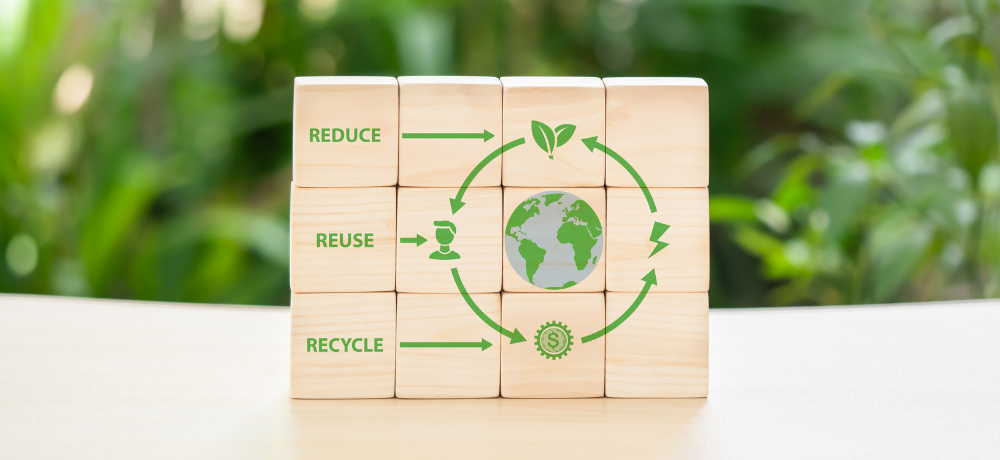
GRP Challenges: Historically, GRP’s thermoset resins made recycling difficult. However, current innovations are enabling circular solutions such as:
-
Mechanical grinding for use in concrete or asphalt aggregate
-
Pyrolysis to recover fibres and resin fractions
-
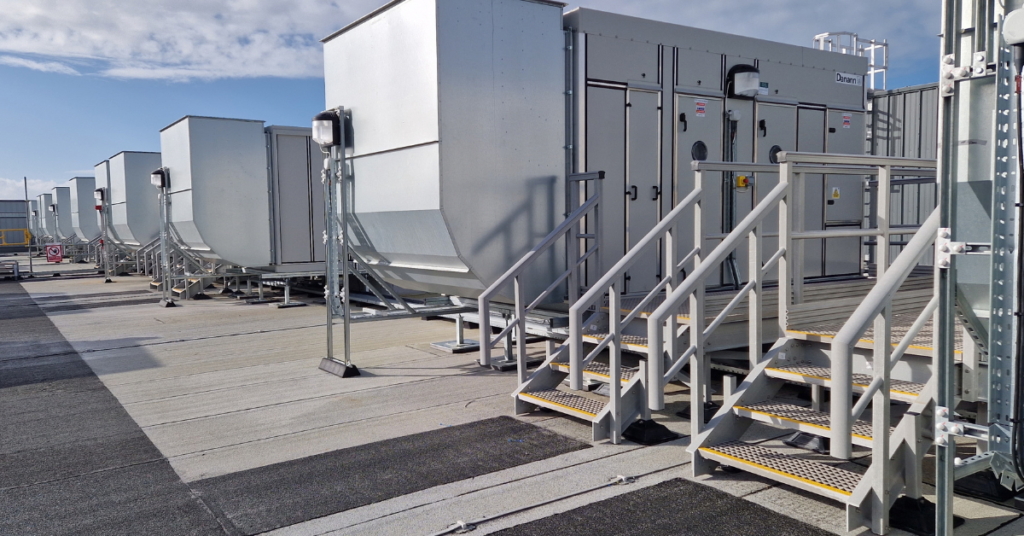
Direct reuse in fencing, access structures, and modular footbridges
Steel Recycling Caveat: While steel is recyclable, re-melting is energy intensive, contributing to indirect emissions and requiring a global logistics chain that offsets some recycling benefits.
📘 Sources:
- Journal of Material Cycles and Waste Management (2021)
- Composites Recycling Technology Roadmap (JEC Group, 2022)
- Advanced Composites Circularity Report (2023, EU Horizon 2020)
✅ GRP’s recyclability is advancing rapidly, moving from landfill to closed-loop recovery and reuse.
GRP Sustainability Report Conclusion:
Products made from GRP can offer significant environmental benefits because of their characteristically low weight, good mechanical properties, and excellent resistance to corrosion.
GRP can be effectively used in the development of new structures to achieve a superior service life without the need for regular, costly maintenance. As we work towards sustainability goals and extending the life of products, glass-reinforced plastic can also be incorporated into existing structures to extend existing service life.
With an exceptional strength-to-weight ratio, GRP will reduce the overall carbon footprint of a project. Using a revolutionary approach that focuses on intelligent GRP design combined with innovative manufacturing processes, Relinea can develop solutions that have a much lower carbon footprint in comparison to traditional building materials such as concrete & steel. Built to last, GRP is the material of the future for those seeking energy-efficient, green, sustainable solutions.
You can read our full 2025 Sustainability Report here.