Why GRP Rooftop Access Systems Are Growing in Data Centre Construction
Data centre construction across the UK and Europe is continuing at an unprecedented pace. Driven by cloud computing, AI infrastructure, edge networks, and increasing digital demand, developers are delivering larger and more technically complex facilities than ever before.
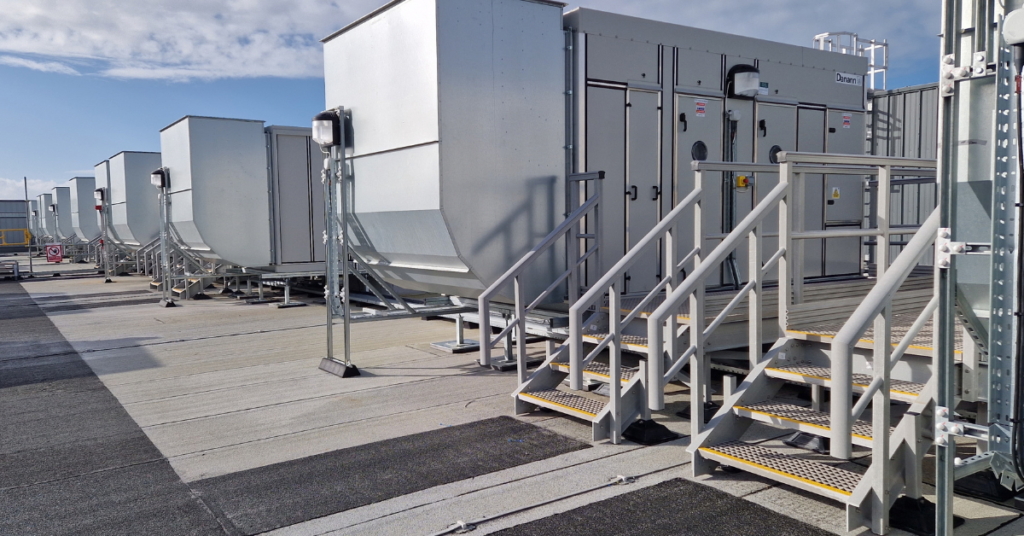
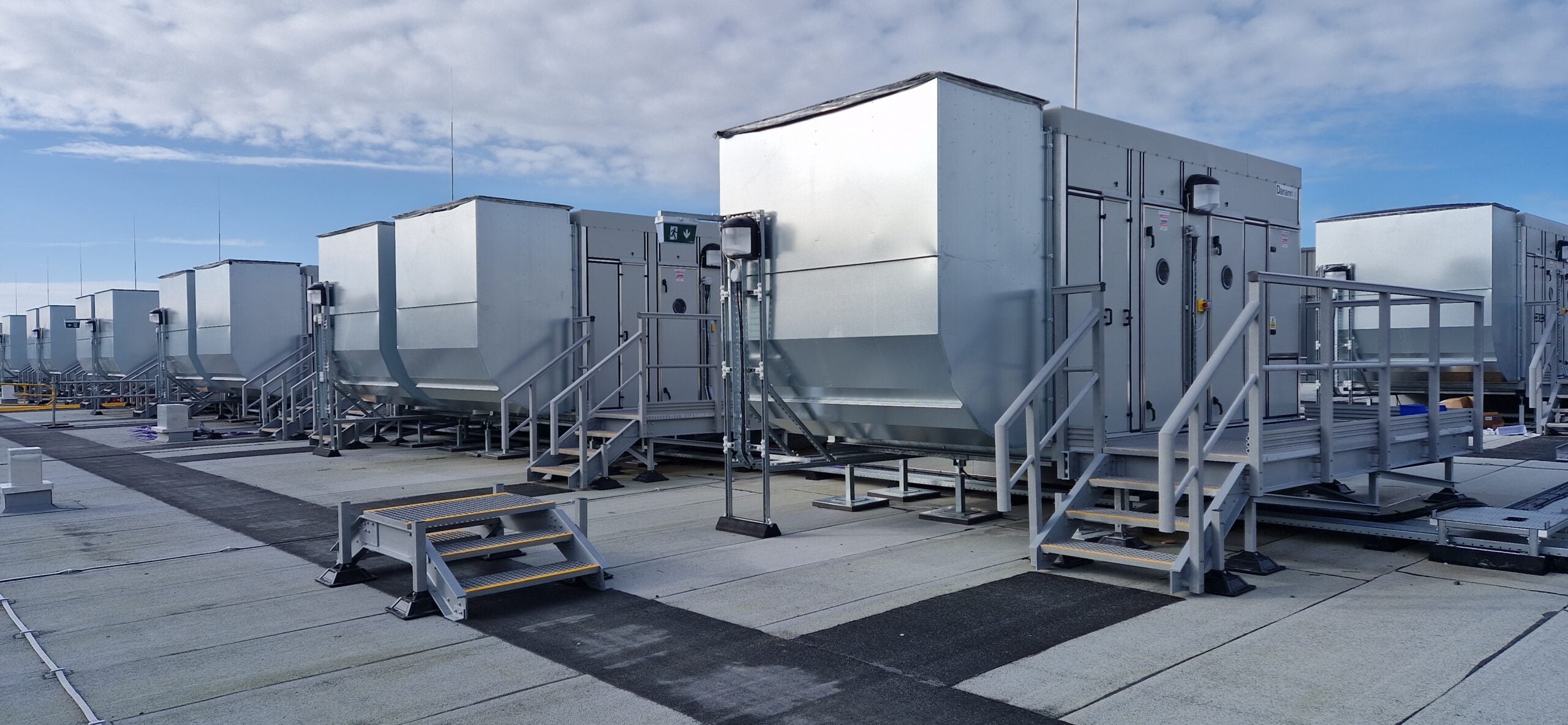
As the sector evolves, rooftop spaces are becoming increasingly important within overall building design. What was once a relatively simple plant area is now a densely coordinated environment containing cooling systems, cable routes, power infrastructure, ductwork, maintenance zones, and renewable energy technologies.
This growing complexity is changing how rooftop access infrastructure is designed.
For consultants, contractors, and developers involved in data centres, GRP rooftop access systems are becoming an increasingly important part of the conversation. Lightweight, corrosion-resistant, and non-conductive materials are helping project teams address the structural, safety, and coordination challenges associated with modern rooftop environments.
At Relinea, many of these challenges are already shaping the specification of GRP walkways, access platforms, and rooftop safety systems across complex infrastructure projects.
Why Rooftop Access Is Changing in Modern Data Centres
Modern data centres rely heavily on rooftop-mounted infrastructure to support cooling, ventilation, and power distribution systems.
Depending on the facility design, rooftops may contain:
- chillers and dry coolers
- HVAC systems
- pipework and ducting
- cable containment systems
- rooftop plant access zones
- photovoltaic systems
- monitoring equipment
- perimeter safety systems
As rooftop plant density increases, safe movement around equipment becomes more important during both the design and construction phases.
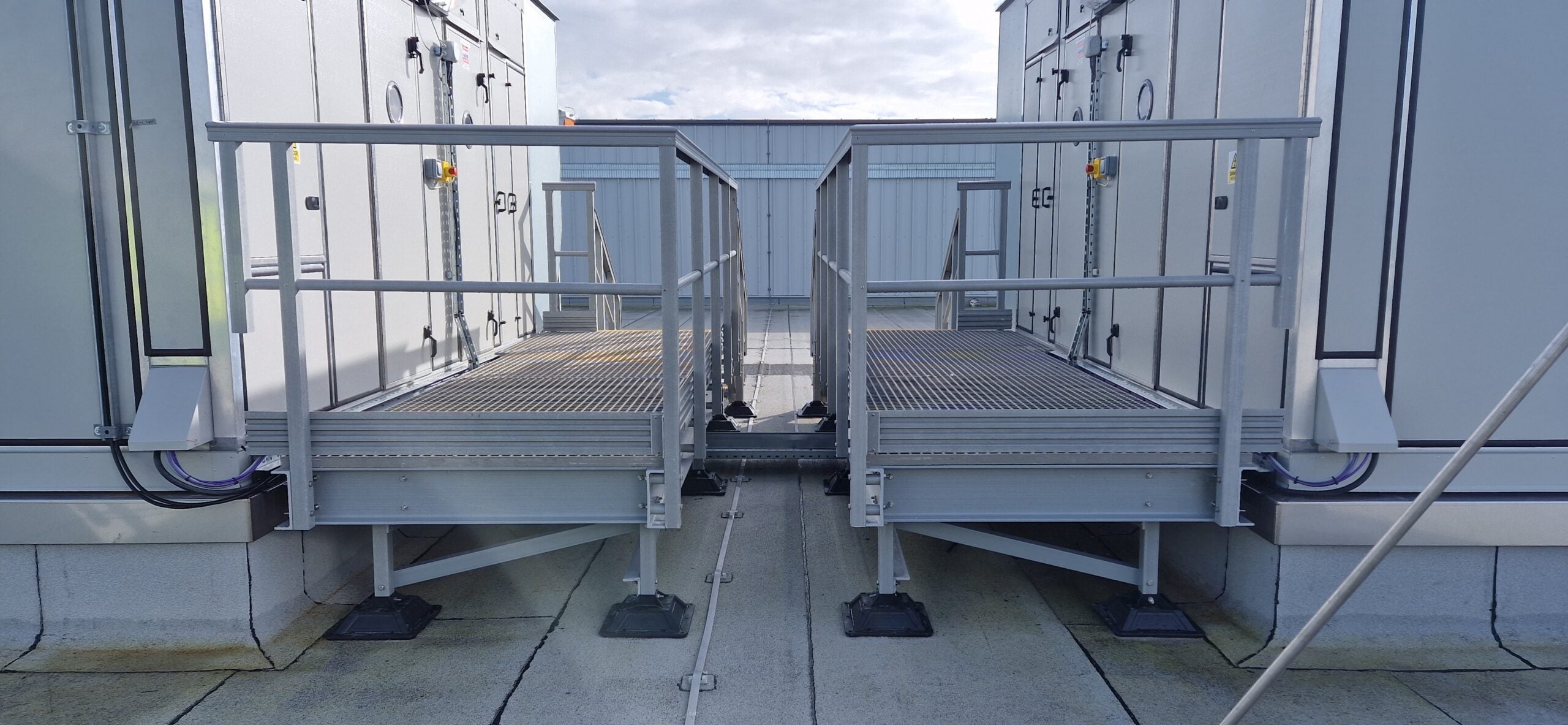
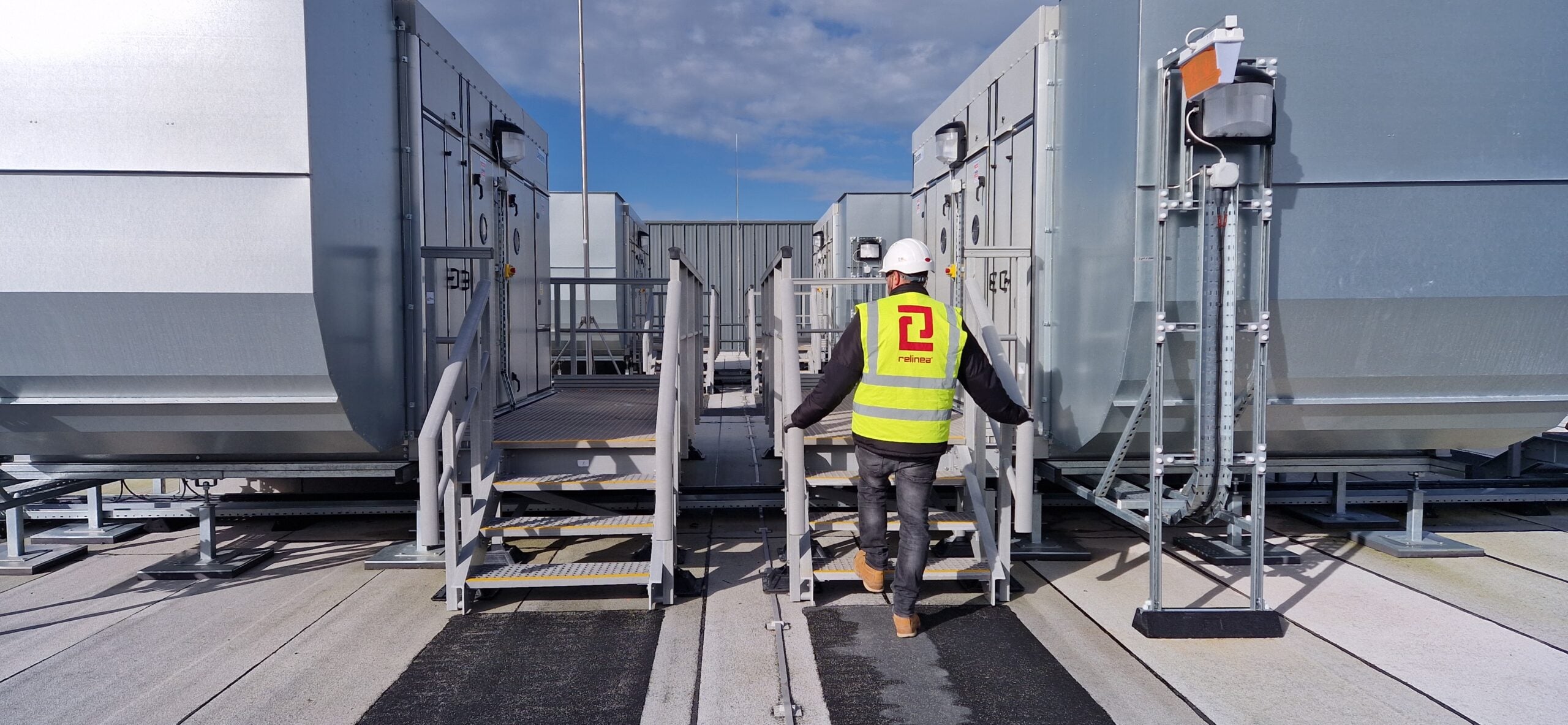
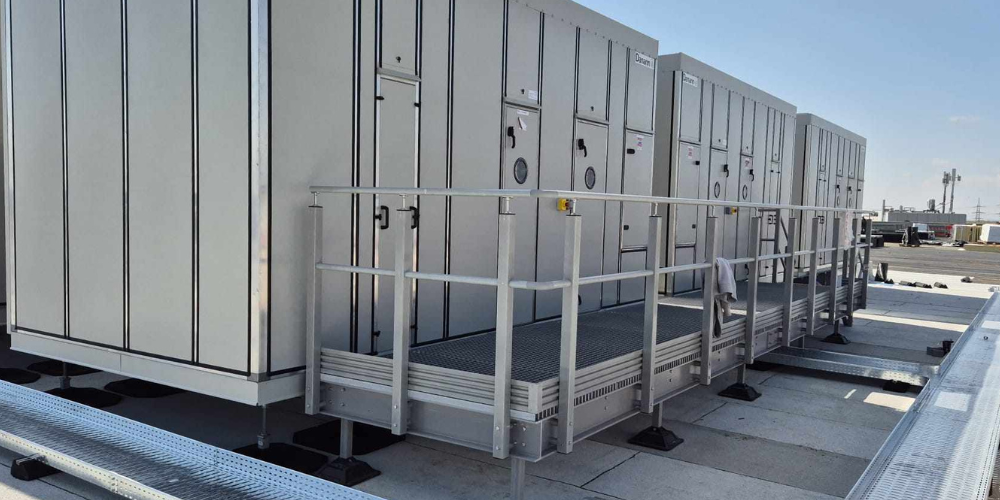
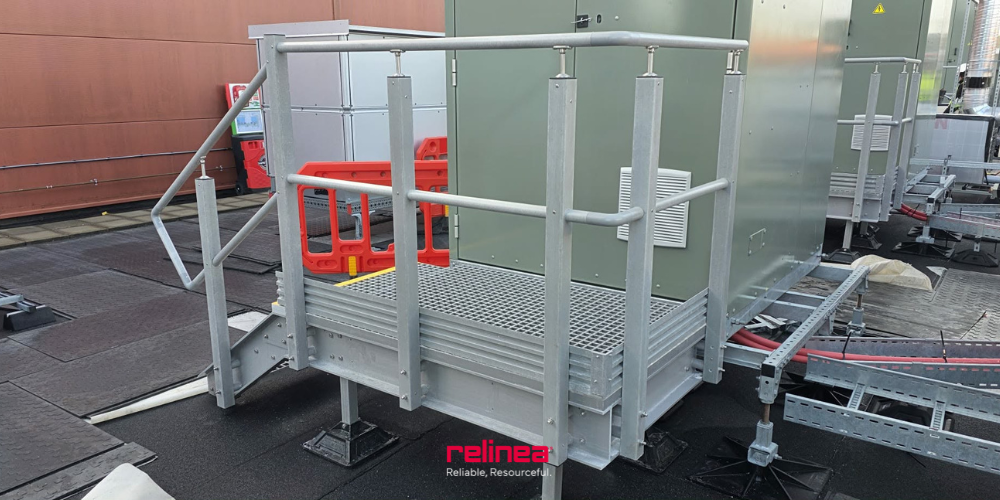
This has increased demand for properly coordinated GRP rooftop access systems that can provide:
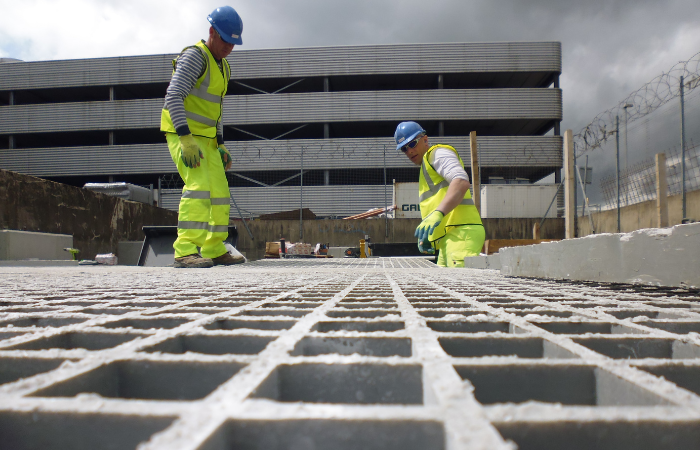
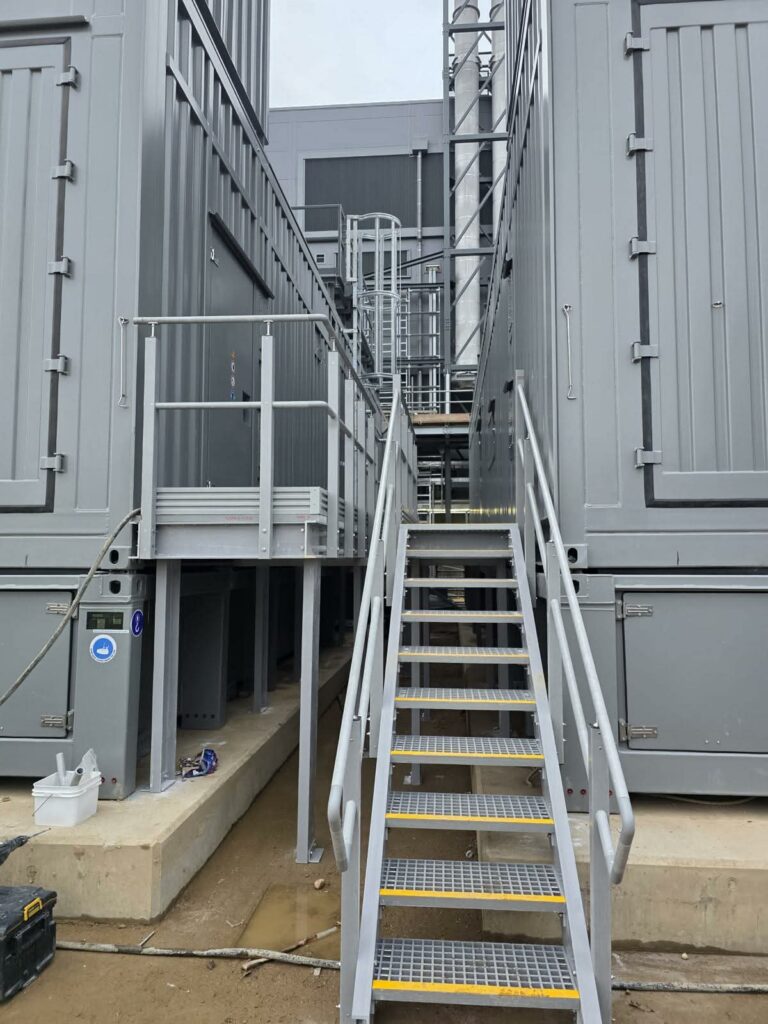
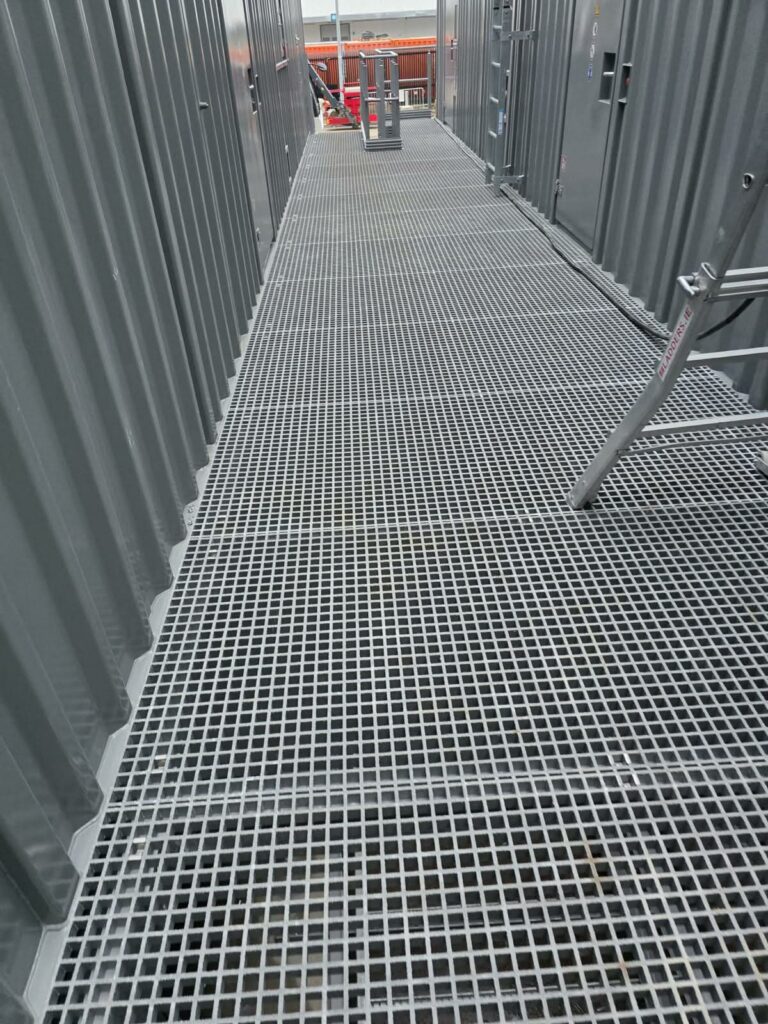
- defined maintenance walkways
- anti-slip access routes
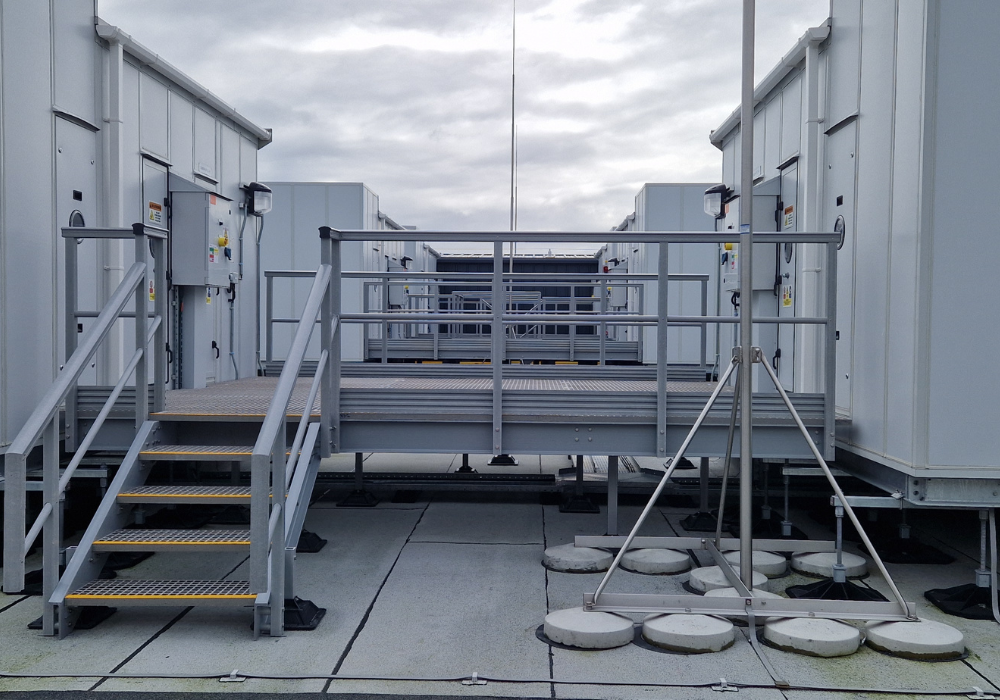
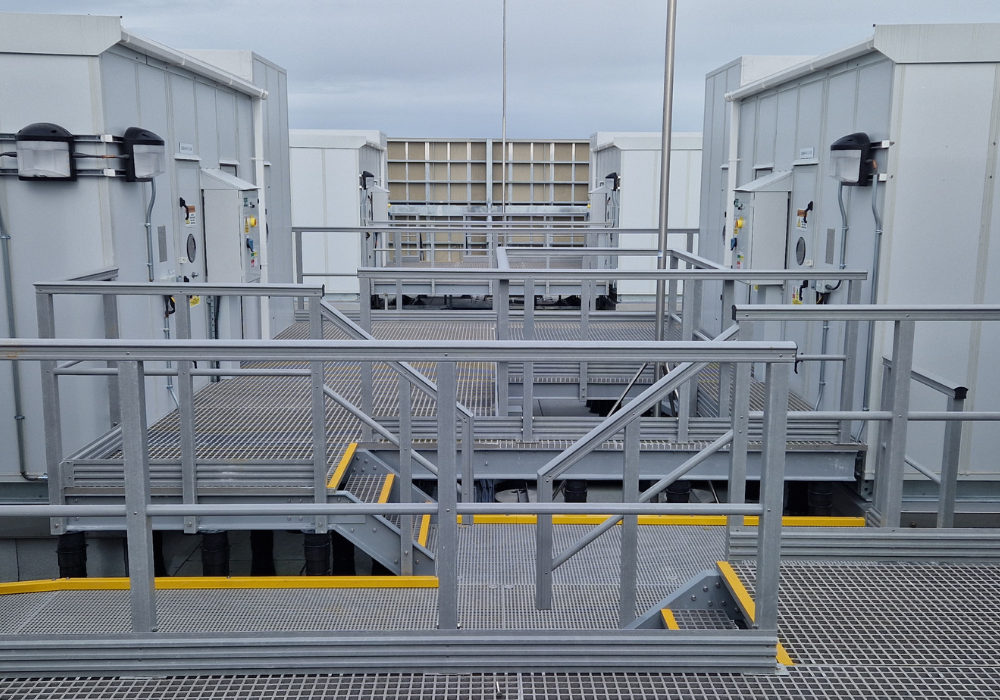
- elevated crossing points
- safe working platforms
- integrated handrail systems
Relinea’s GRP access systems are increasingly specified in environments where rooftop layouts require lightweight and adaptable access infrastructure capable of integrating alongside mechanical and electrical services.
Rooftop Congestion Is Driving Demand for Better Access Systems
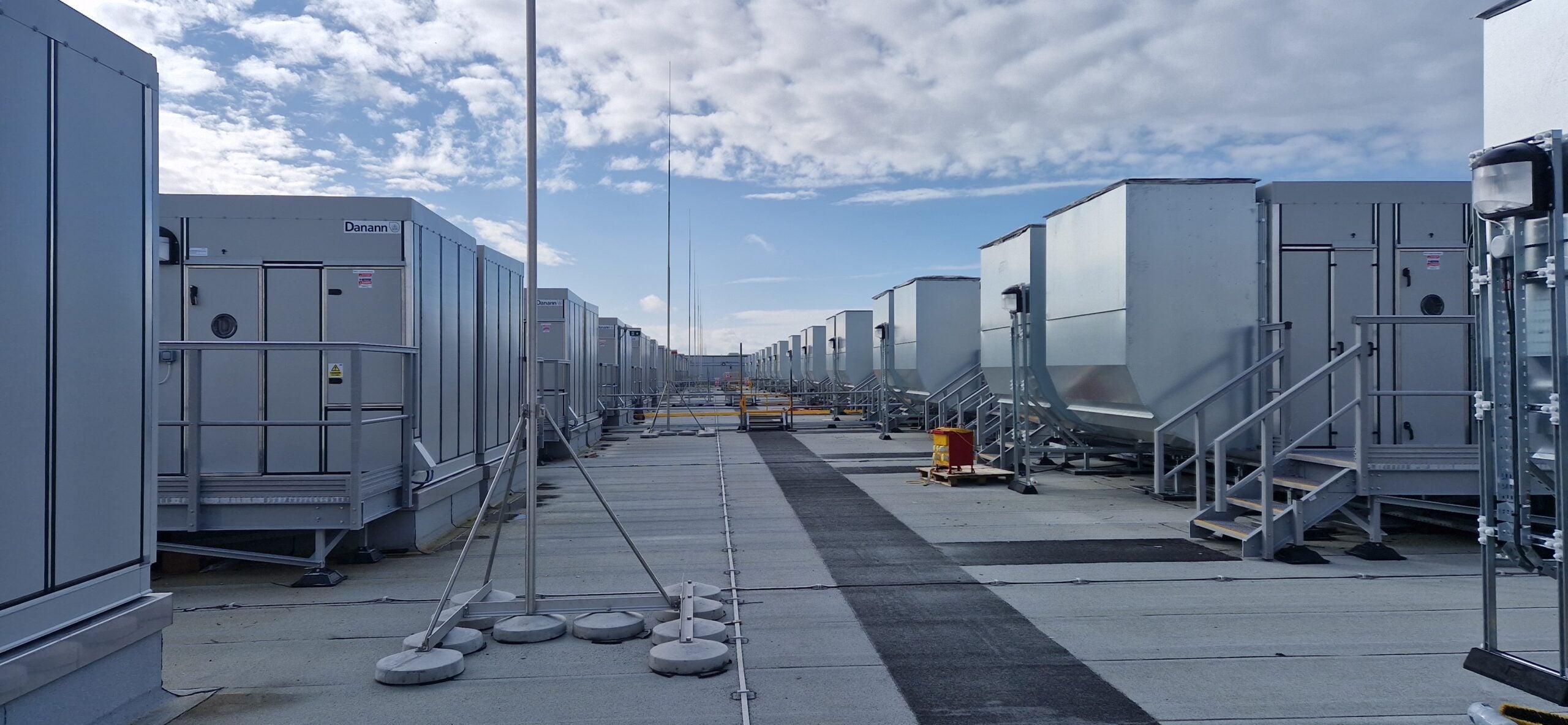
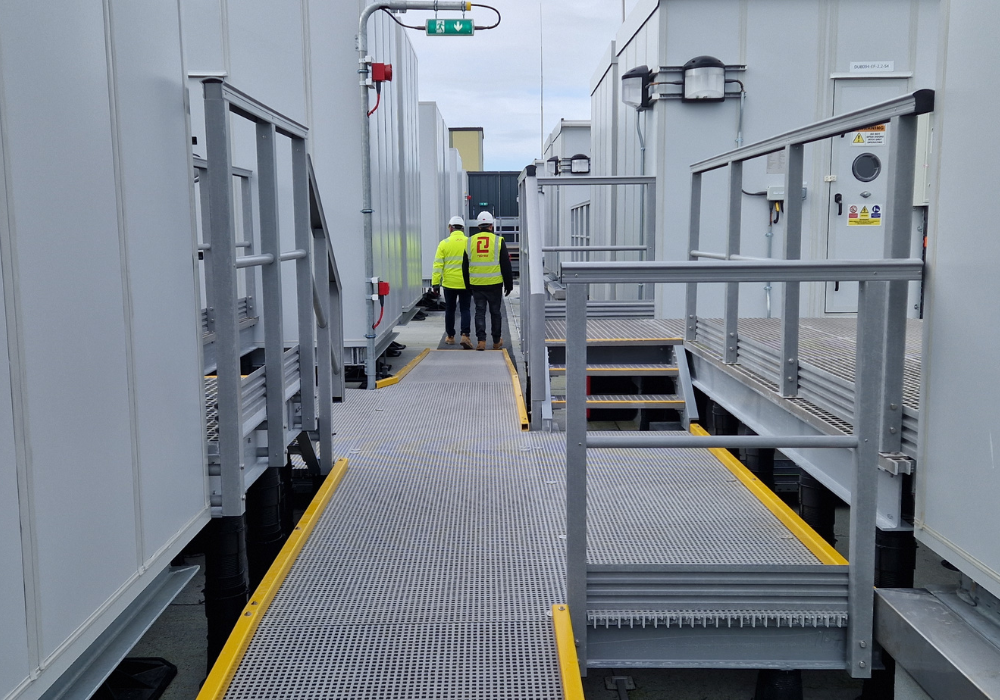
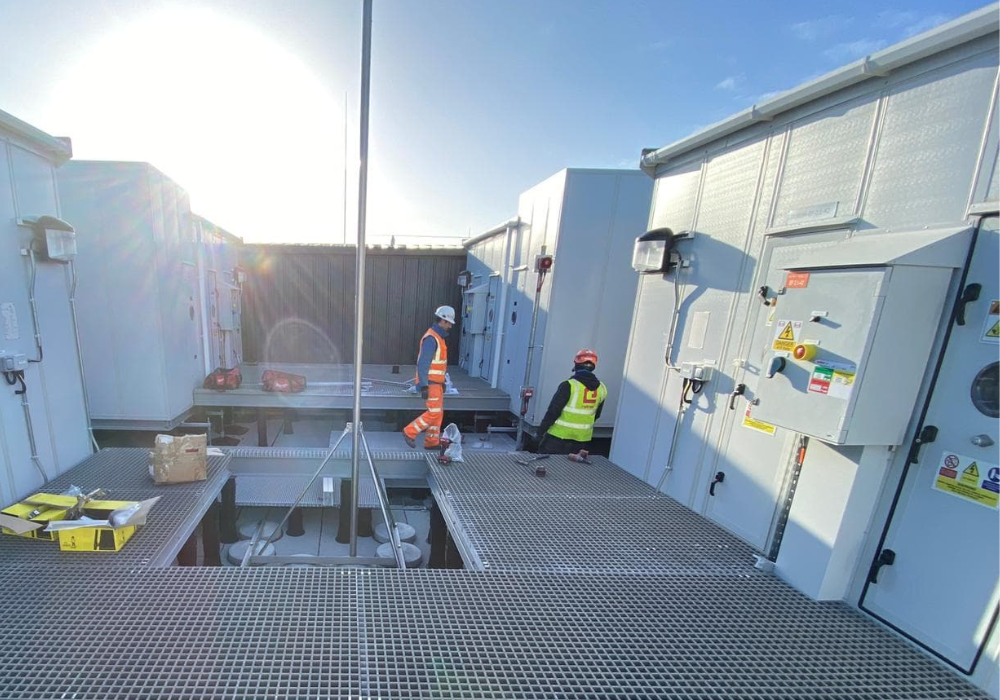
One of the biggest challenges in data centre construction is the concentration of services and equipment within limited rooftop space.
Large-scale cooling infrastructure, cable routes, and mechanical systems can create highly constrained environments where safe access becomes difficult if not carefully coordinated.
Without properly planned rooftop walkway systems, congested layouts can restrict movement around critical infrastructure and complicate future maintenance access.
As a result, project teams are placing greater emphasis on:
- GRP walkways for data centres
- elevated access platforms
- anti-slip rooftop grating
- modular access systems
- designated maintenance routes
Early integration of rooftop access infrastructure within BIM coordination and plant layout design can help reduce clashes and improve overall rooftop functionality.
Why Lightweight GRP Access Systems Matter
Structural efficiency is a major consideration in new-build data centre construction.
With rooftop equipment loads already substantial, reducing unnecessary weight elsewhere in the design can offer significant advantages.
Traditional steel access systems can contribute considerable dead load to the roof structure, particularly across large rooftop footprints where extensive walkway networks and access platforms are required.
This is one reason why GRP rooftop access systems are becoming increasingly common within the sector.
Reducing Structural Load
GRP walkways and access platforms are significantly lighter than many traditional steel alternatives.
This can help:
- reduce demands on the supporting structure
- simplify rooftop coordination
- improve installation efficiency
- optimise structural design
For hyperscale developments, reducing rooftop dead load across multiple infrastructure systems can contribute to broader project efficiencies.
Relinea’s lightweight GRP systems are designed to support these requirements while maintaining durability and structural performance.
Faster and More Efficient Installation
Construction programmes within the data centre sector are often highly compressed.
Modular GRP access systems can support faster installation by:
- reducing lifting requirements
- simplifying handling on site
- accelerating assembly
- reducing hot works
- improving installation flexibility
Because GRP systems are lightweight and modular, they can often be installed more efficiently alongside other rooftop services during phased construction programmes.
Why Non-Conductive GRP Systems Are Important in Data Centres
Electrical infrastructure sits at the centre of every data centre facility.
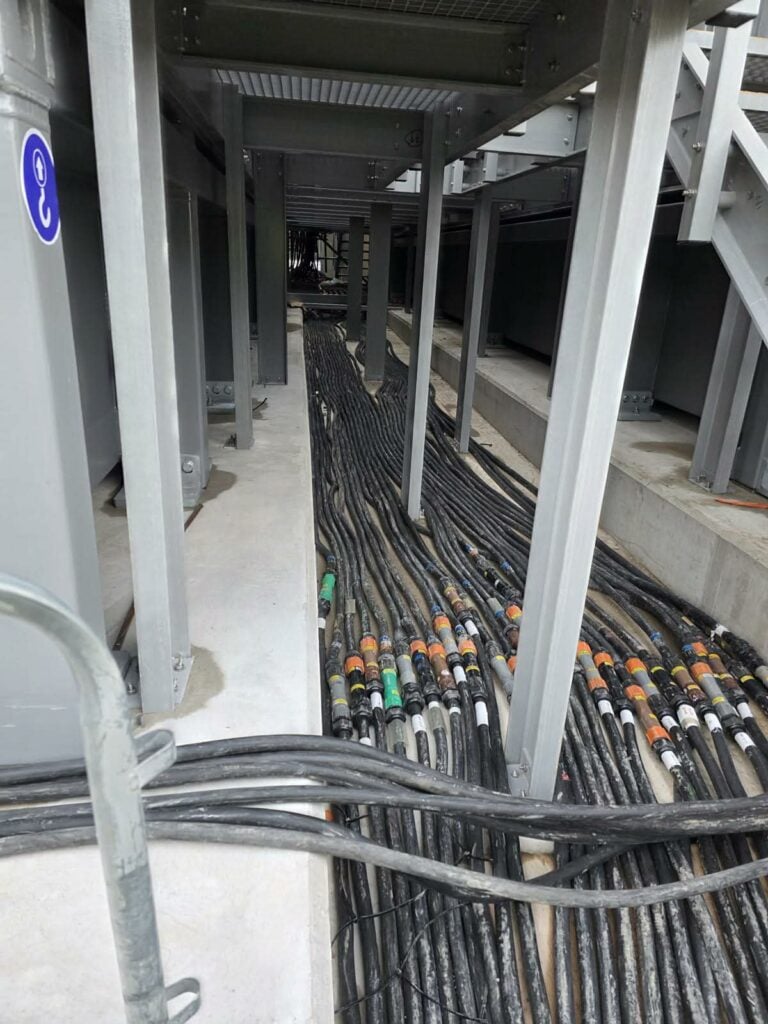
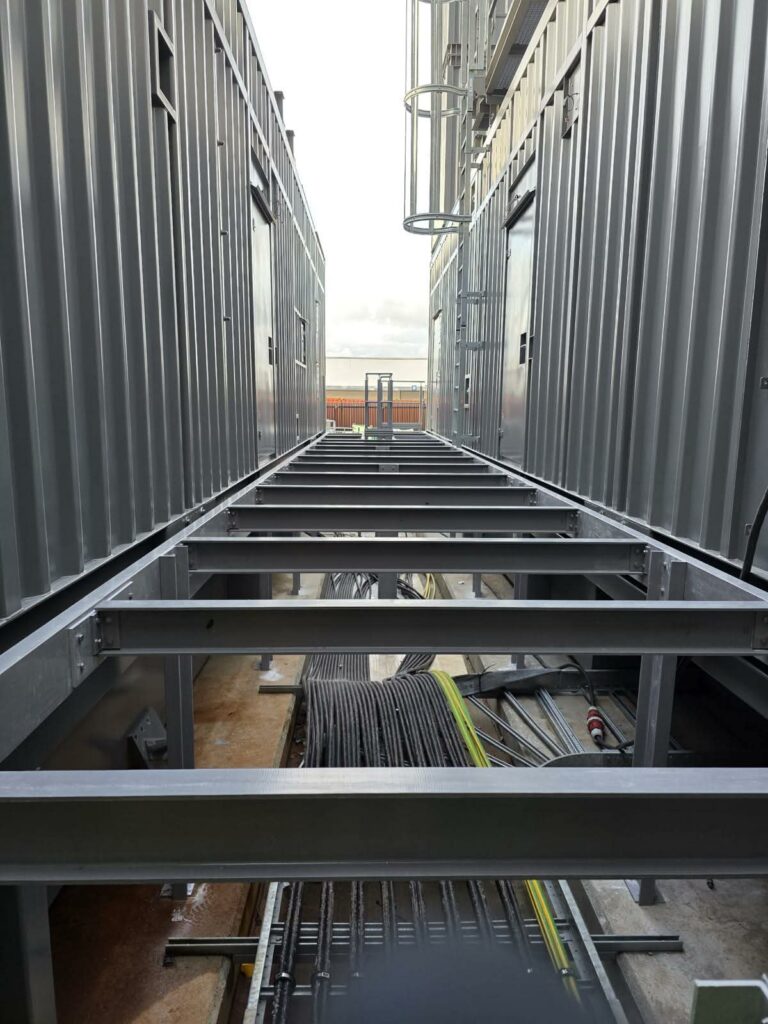
Rooftops frequently contain cable containment systems, electrical distribution infrastructure, monitoring equipment, and associated services operating in close proximity to access routes.
For this reason, material selection is an important consideration during rooftop design.
GRP access systems are non-conductive, making them particularly well suited to electrically sensitive environments.
This can provide advantages around:
- rooftop cable routes
- power distribution infrastructure
- plant access zones
- electrical equipment areas
- exposed rooftop environments
Relinea’s GRP rooftop access systems are frequently specified where electrical safety, corrosion resistance, and lightweight performance are all important project considerations.
Modular Rooftop Access Systems Support Modern Construction Methods
The data centre sector has increasingly adopted modular and off-site construction approaches to improve speed, quality, and programme certainty.
This trend is also influencing rooftop access infrastructure.
Relinea’s modular GRP walkway systems and access platforms are manufactured off-site and assembled efficiently during installation, helping support:
- faster project delivery
- improved quality control
- simplified logistics
- reduced site labour requirements
- predictable installation sequencing
For contractors managing large-scale data centre projects, modular GRP systems can help improve coordination across complex rooftop environments.
Durability and Long-Term Performance
Data centre rooftops expose materials to constant environmental conditions including:
- rain and moisture
- UV exposure
- temperature fluctuations
- standing water
- mechanical wear
Over time, corrosion resistance and material durability become important specification considerations.
GRP rooftop access systems are increasingly specified because they offer:
- corrosion resistance
- anti-slip performance
- low maintenance requirements
- long service life of 50+ years
- stable performance in exposed environments
These characteristics make GRP walkways and access systems particularly suitable for rooftop applications where durability and long-term performance are priorities.
The Future of GRP Rooftop Access in Data Centres
As data centres continue to increase in scale and technical complexity, rooftop infrastructure will play an increasingly important role in overall building design.
Future facilities are likely to require:
- more coordinated rooftop access planning
- lightweight access infrastructure
- non-conductive access systems
- modular walkway solutions
- safer maintenance routes
- durable corrosion-resistant materials
For developers, consultants, and contractors involved in building data centres, GRP rooftop access systems are becoming an important part of delivering safe, efficient, and future-ready rooftop environments.
At Relinea, the continued growth of complex infrastructure projects across the UK and Europe is reinforcing the importance of lightweight GRP walkways, access platforms, and rooftop safety systems that can support the evolving demands of modern data centre construction.
Related Case Studies: