GRP vs Steel: Is Corrosion Still Costing the Construction Industry Billions?
GRP vs Steel: Which Is Better for Construction?
GRP is now often more cost-effective than steel, both upfront and over the lifecycle, while also eliminating corrosion risk.
Rising steel prices, labour costs, and maintenance requirements mean GRP is increasingly the smarter commercial and technical choice.
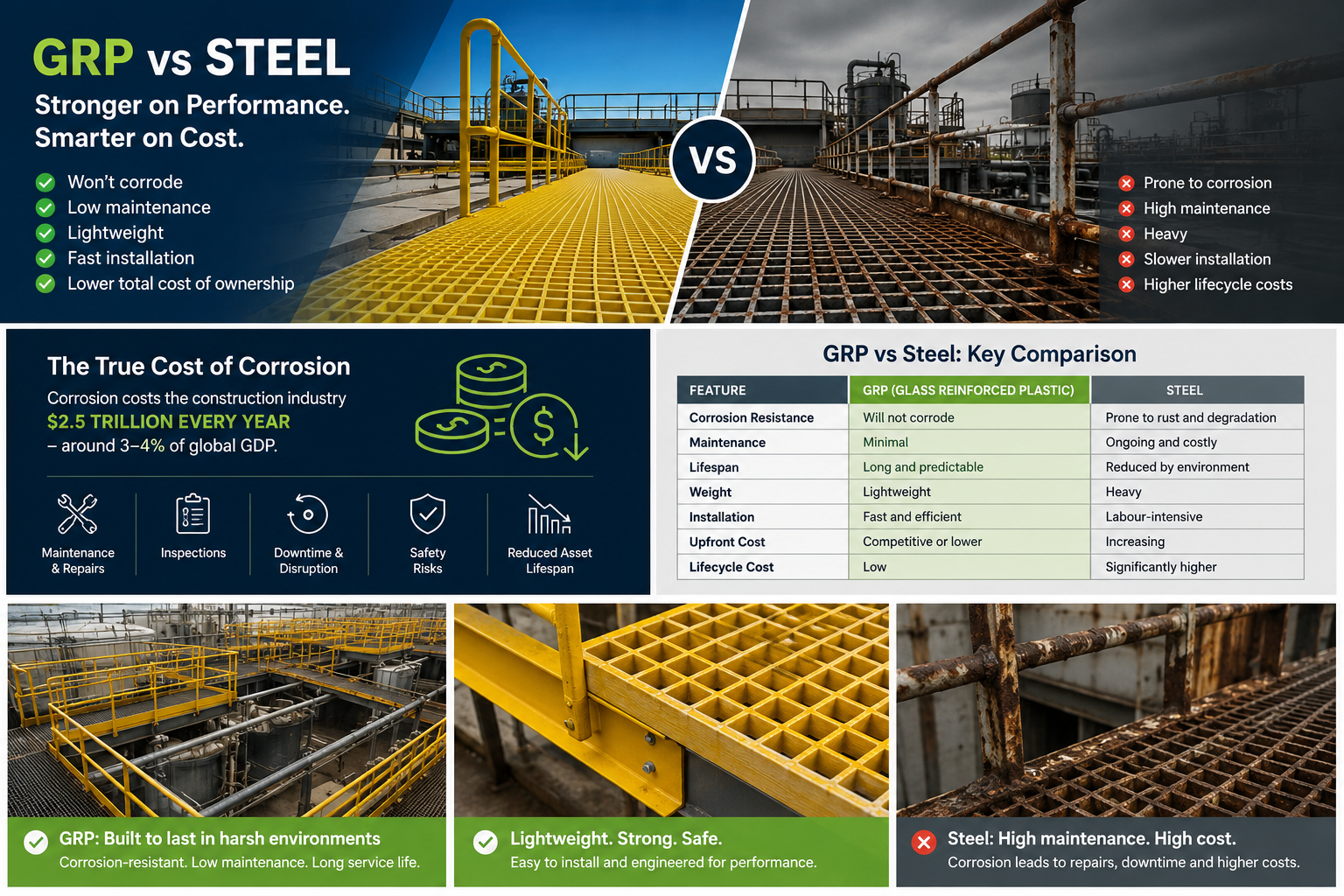
GRP vs Steel: Key Differences
| Feature | GRP | Steel |
|---|---|---|
| Corrosion Resistance | Will not corrode | Prone to rust and degradation |
| Maintenance | Minimal | Ongoing and costly |
| Lifespan | Long and predictable | Reduced by environment |
| Weight | Lightweight | Heavy |
| Installation | Fast and efficient | Labour-intensive |
| Upfront Cost | Competitive or lower | Increasing due to material & labour |
| Lifecycle Cost | Low | Significantly higher |
Is Steel Still Cheaper Than GRP?
No – steel is no longer consistently cheaper than GRP.
In many applications, particularly access systems, platforms, and grating, GRP is now price-competitive or lower cost upfront, especially when you factor in:
- Rising steel material costs
- Increased fabrication and galvanising costs
- Higher installation labour requirements
- Transport and handling costs due to weight
When lifecycle costs are included, GRP is almost always the more economical option.
What Is the Cost of Corrosion in Construction?
Corrosion costs the global construction industry an estimated $2.5 trillion annually, equivalent to 3–4% of global GDP.
A significant portion of this cost is directly linked to the continued use of steel in environments where corrosion is inevitable.
Why Steel Still Drives Corrosion Costs
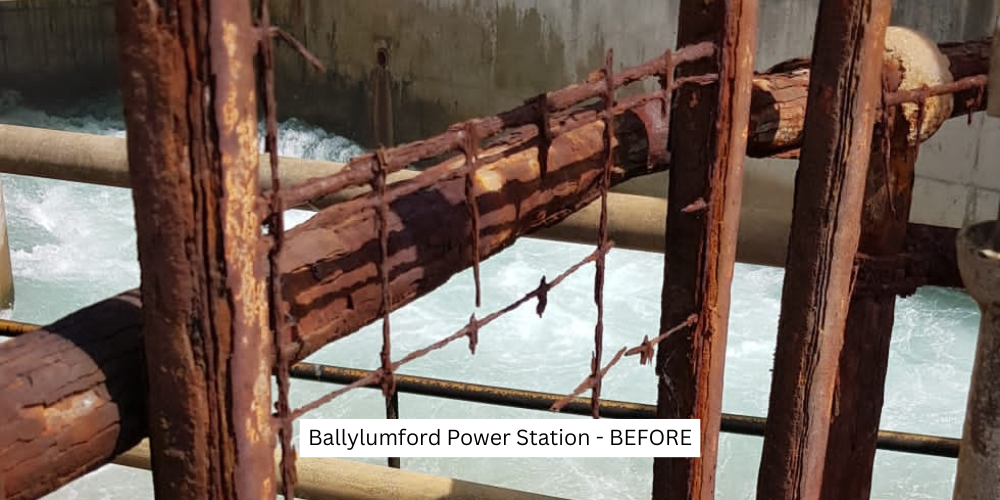
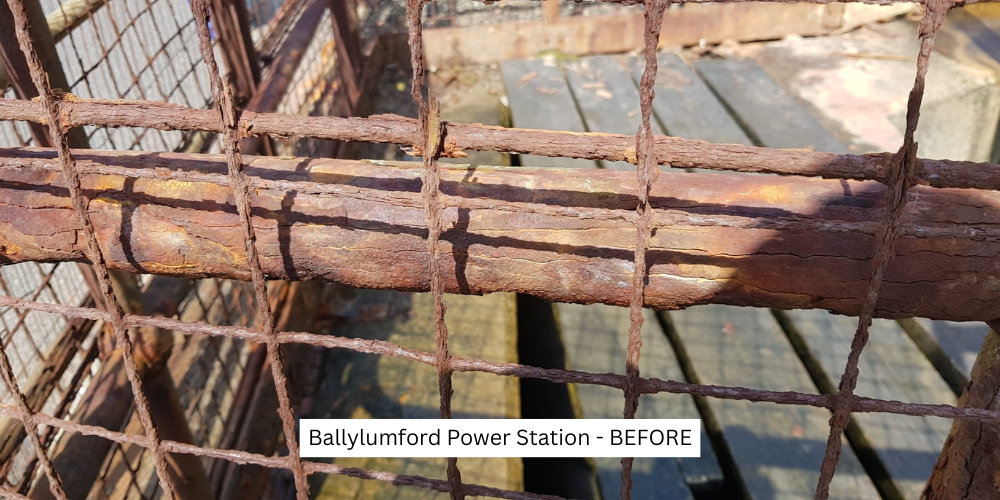
Steel remains widely used, but it introduces long-term risk.
Steel is vulnerable to:
- Moisture and humidity
- Salt exposure (coastal and roads)
- Chemicals in industrial environments
- Damage to coatings or galvanisation
Even protected steel deteriorates over time, leading to recurring maintenance and replacement costs.
Why GRP Is Replacing Steel
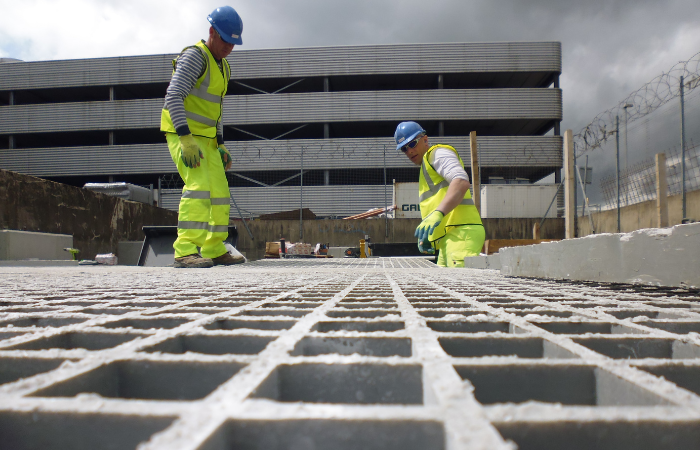
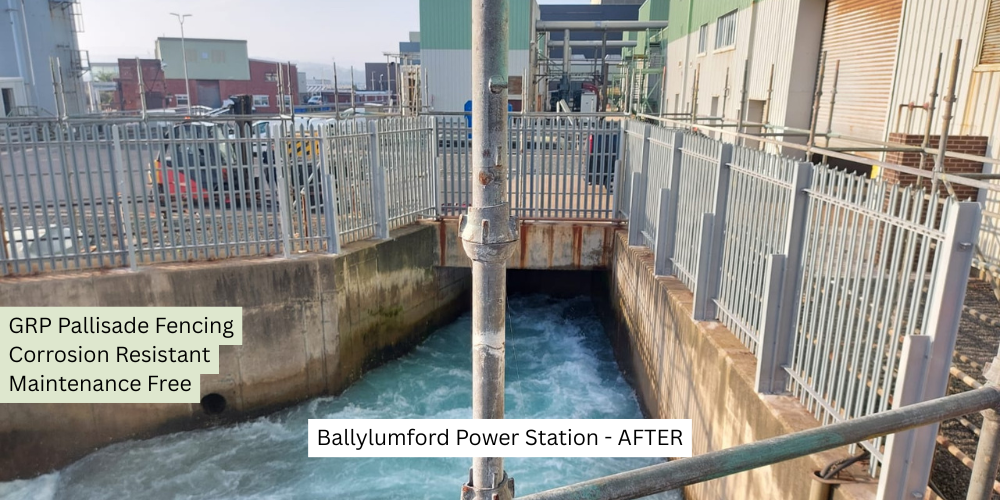
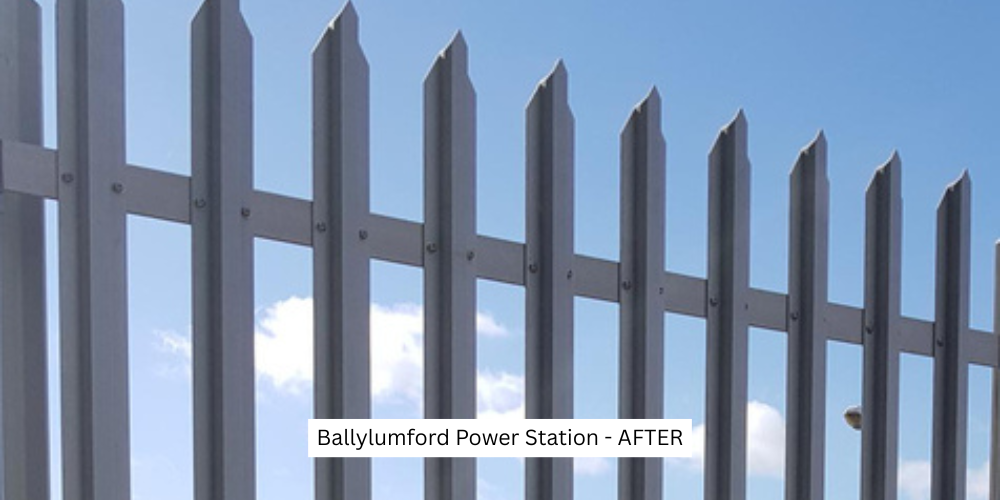
GRP eliminates corrosion at source, making it a more reliable long-term solution.
Advantages of GRP over steel:
- Will not rust or degrade
- Resistant to chemicals and harsh environments
- No coatings or galvanisation required
- Lightweight and faster to install
- Lower total cost of ownership
This is why GRP is increasingly specified across infrastructure, utilities, and industrial projects.
GRP vs Steel: Which Has Lower Lifecycle Cost?
GRP has a significantly lower lifecycle cost than steel, and in many cases, a lower upfront cost as well.
Steel requires continuous investment over time:
- Inspection and maintenance
- Repair of corroded areas
- Re-coating or re-galvanising
- Full replacement cycles
GRP reduces costs by:
- Eliminating corrosion-related maintenance
- Extending service life
- Reducing labour and downtime
- Minimising replacement frequency
How Corrosion Impacts Sustainability
Corrosion increases environmental impact through repeated material use and maintenance.
Steel-related corrosion leads to:
- Higher embodied carbon
- Increased transport and labour emissions
- More construction waste
GRP supports sustainable construction by:
- Extending asset lifespan
- Reducing maintenance interventions
- Lowering lifecycle carbon emissions
Why the Industry Is Shifting Away from Steel
The move away from steel is accelerating due to:
- Cost volatility in steel markets
- Pressure to reduce maintenance budgets
- Net zero and sustainability targets
- Demand for predictable, long-life materials
GRP aligns with all of these trends.
When Should You Choose GRP Over Steel?
GRP is the better choice when:
- Corrosion risk is present
- Maintenance access is limited or costly
- Long-term cost certainty is required
- Sustainability is a priority
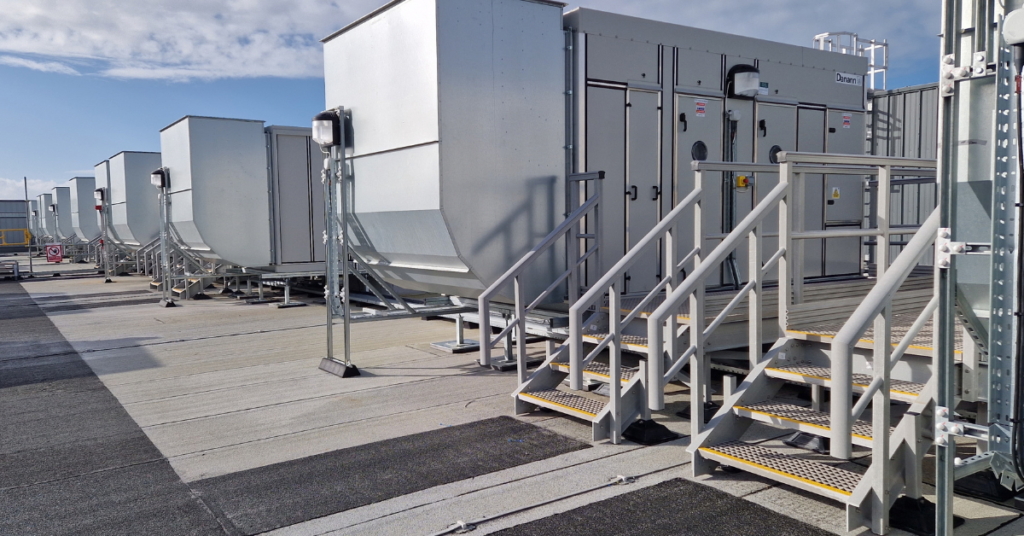
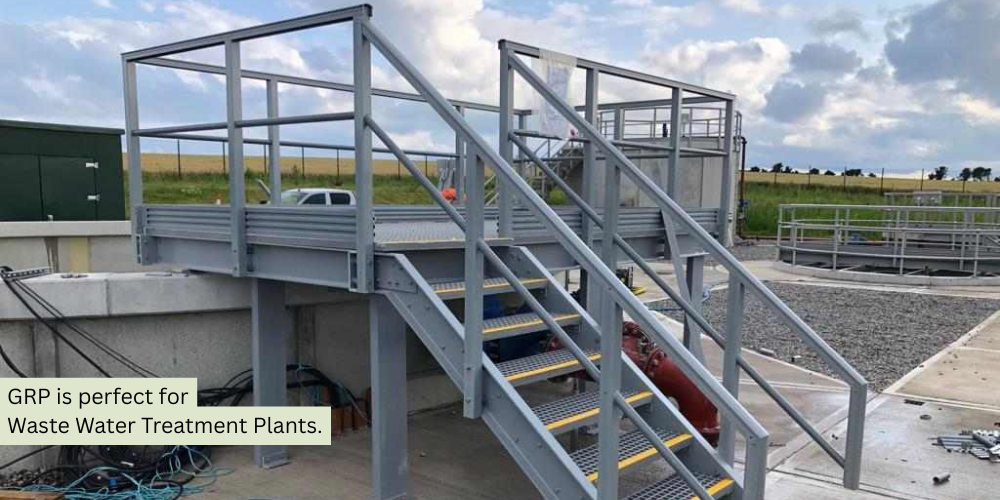
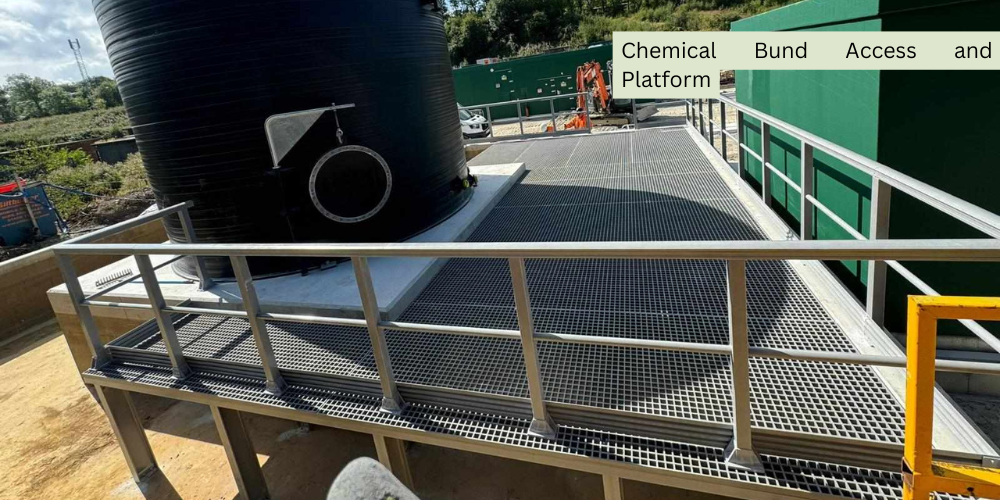
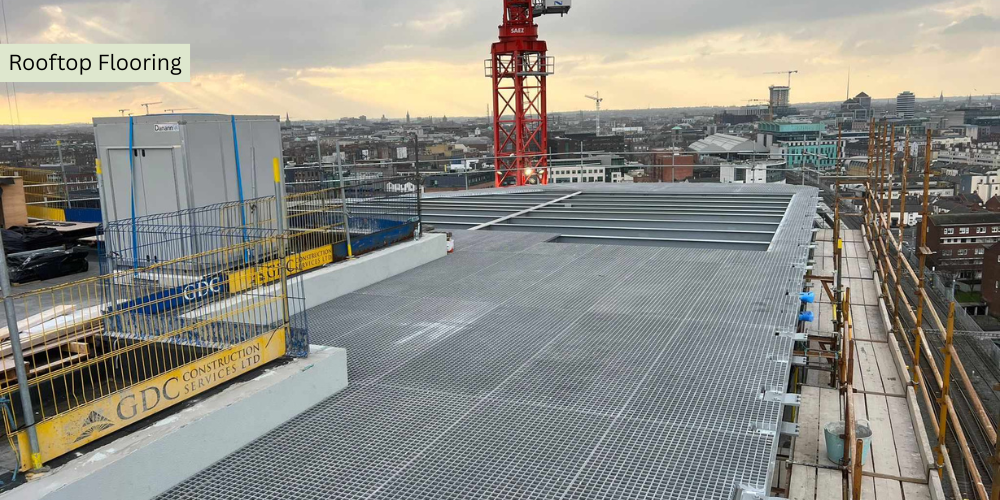
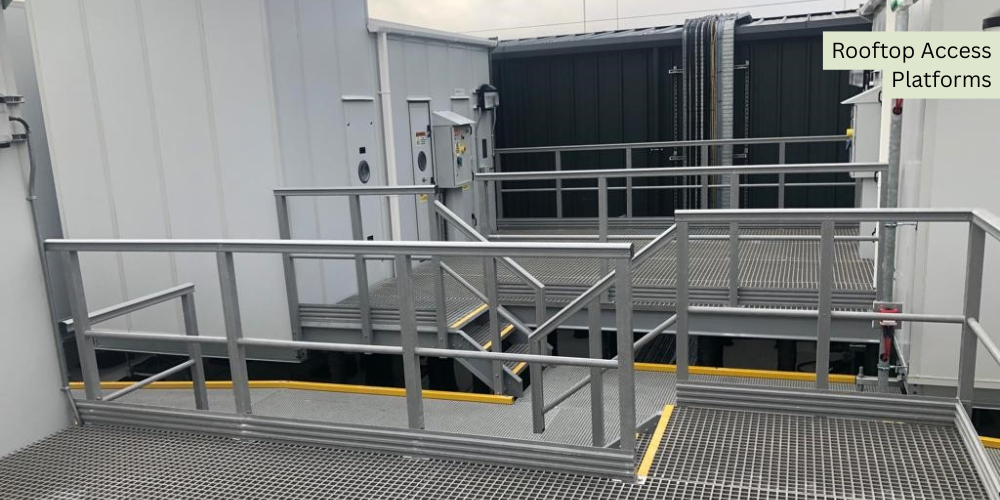
For access systems, platforms, walkways, and grating, GRP is now often the preferred material.
Conclusion: GRP vs Steel in Modern Construction
Corrosion is still costing the construction industry billions, but it is largely driven by outdated material choices.
Steel is no longer the default cost-effective option. GRP delivers both immediate and long-term savings while eliminating corrosion risk entirely.
The shift from steel to GRP is not just about durability, it’s about smarter, more efficient construction.
WHY SPECIFY GRP OVER TRADITIONAL STEEL?
A Professional Engineering Comparison & Lifecycle Value Breakdown, GRP VS Steel Performance Report.