How Modular Construction Improves Efficiency in Modern Infrastructure Projects
Modular construction is becoming increasingly important across modern infrastructure and construction projects. As project timelines become more compressed and technical requirements continue to grow, contractors, consultants, and developers are looking for ways to improve installation efficiency, reduce site complexity, and deliver projects with greater predictability.
Across sectors including data centres, rail, water, utilities, and industrial infrastructure, modular construction methods are helping project teams respond to these challenges.
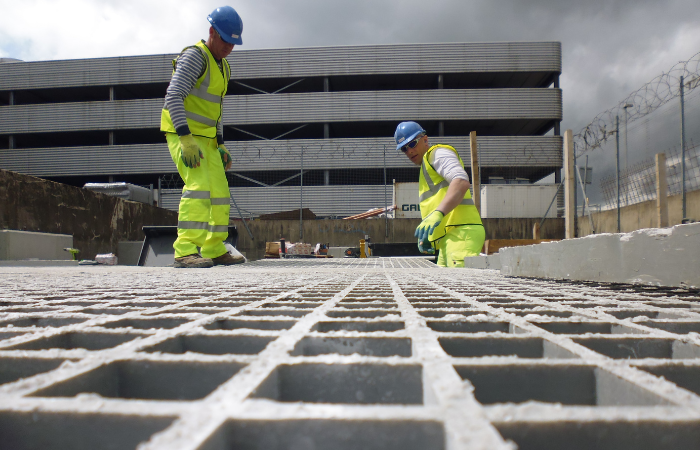
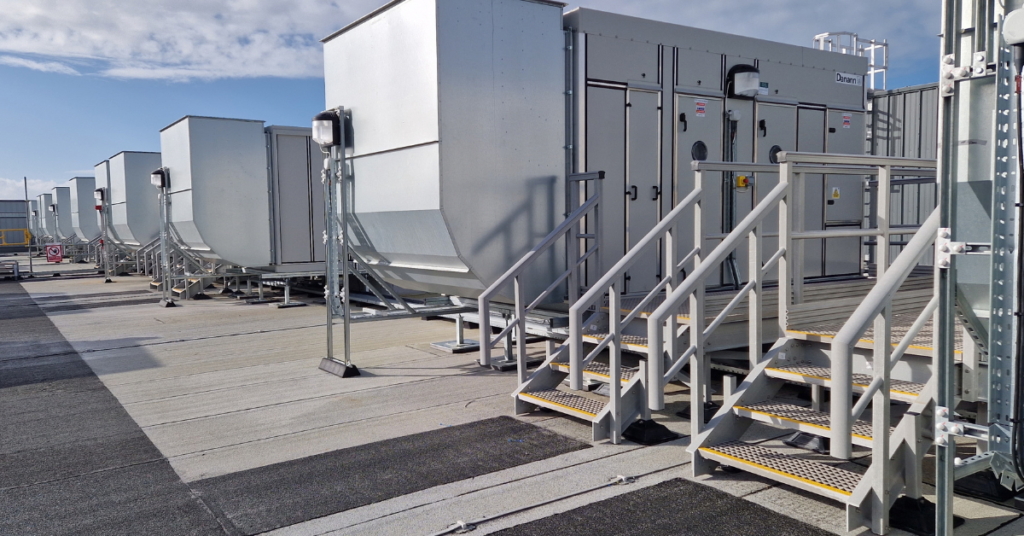
While modular construction is often associated with complete buildings or volumetric construction, the same principles are now being applied to infrastructure components such as GRP access systems, walkways, rooftop platforms, and maintenance access solutions.
For companies such as Relinea, modular GRP access systems are increasingly being specified as part of coordinated infrastructure strategies focused on efficiency, safety, and long-term performance.
What Is Modular Construction?
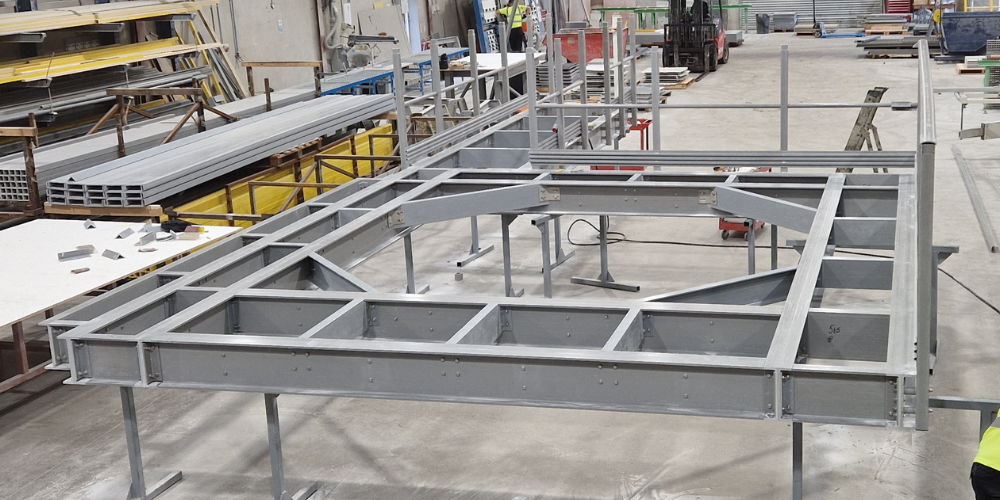
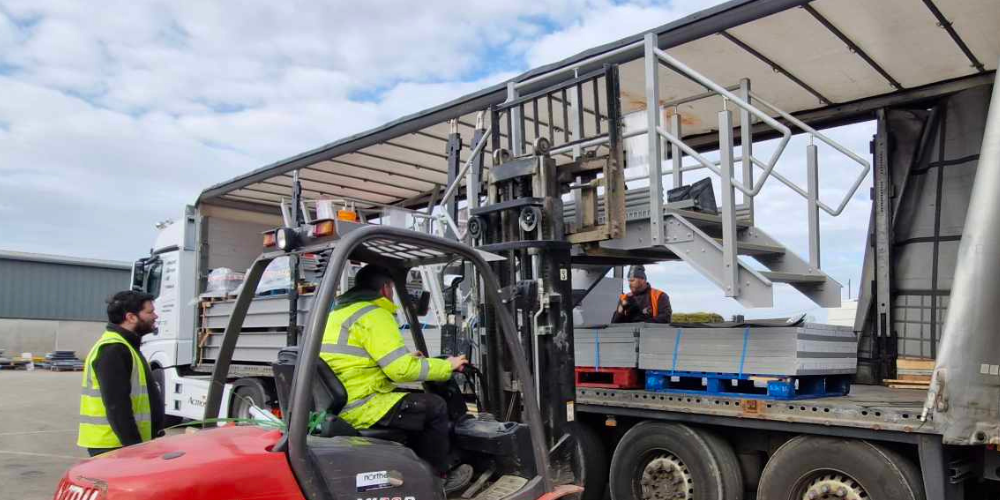
Modular construction refers to the process of manufacturing components off-site before transporting them to the construction site for installation and assembly.
Rather than carrying out extensive fabrication work on-site, modular construction allows systems to be:
- designed in advance
- manufactured in controlled environments
- quality checked before delivery
- assembled more efficiently on-site
This approach is becoming increasingly common because it can help improve:
- construction efficiency
- installation speed
- project coordination
- quality consistency
- health and safety performance
In infrastructure environments, modular construction methods are now widely used for:
- GRP access systems
- rooftop walkways
- access platforms
- handrail systems
- maintenance walkways
- plant access routes
Why Modular Construction Is Growing Across Infrastructure Projects
Modern infrastructure projects are becoming significantly more complex.
Large developments now involve extensive coordination between:
- structural contractors
- MEP contractors
- specialist subcontractors
- design consultants
- project managers
- health and safety teams
At the same time, construction programmes are becoming increasingly compressed.
This is particularly evident in sectors such as:
- data centres
- transport infrastructure
- utilities
- energy projects
- industrial construction
Traditional on-site fabrication methods can create programme delays, logistical challenges, and coordination issues within these fast-paced environments.
As a result, modular construction is becoming increasingly attractive because it helps simplify installation activities while improving overall project efficiency.
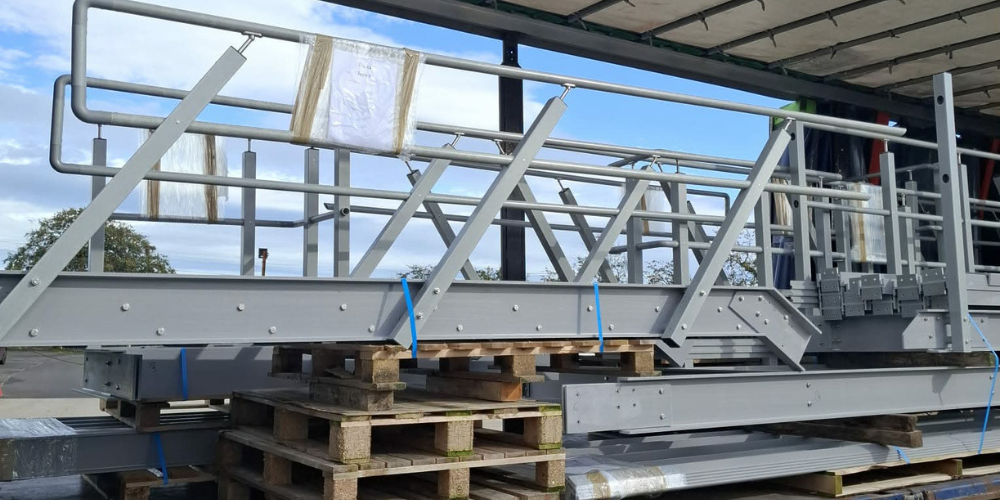
How Modular Construction Improves Installation Efficiency
One of the biggest advantages of modular construction is the reduction in on-site fabrication requirements.
Pre-manufactured systems can arrive ready for assembly, reducing the amount of cutting, welding, fabrication, and adjustment required during installation.
For modular GRP access systems, this creates several important benefits.
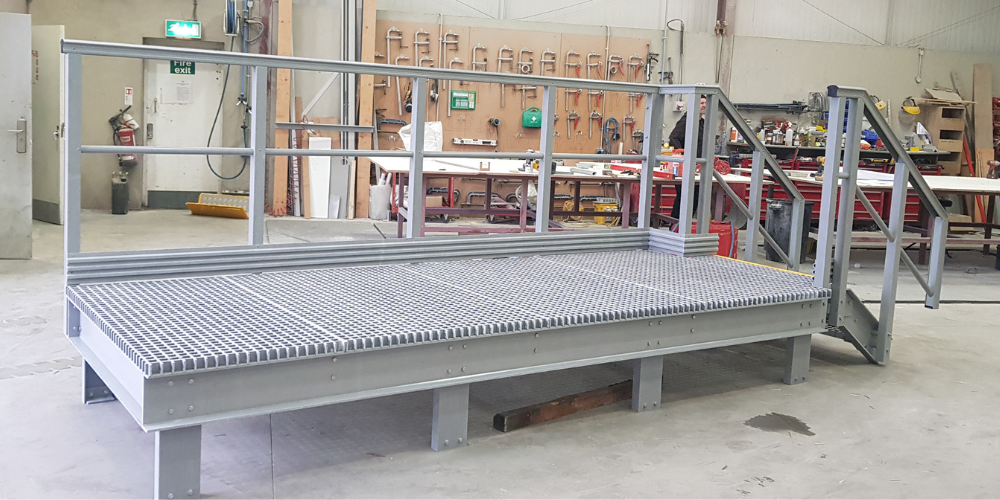
Faster Installation Through Modular Construction
Traditional fabricated access systems can require extensive on-site assembly and modification.
Modular construction methods help reduce these activities by allowing systems to be manufactured and prepared in advance.
This can help:
- accelerate installation programmes
- simplify construction sequencing
- reduce coordination delays
- improve programme predictability
- minimise disruption between trades
In sectors such as data centre construction, where programme certainty is critical, faster installation can provide significant advantages.
Relinea’s modular GRP access systems are designed to support efficient installation across complex infrastructure environments where construction coordination is essential.
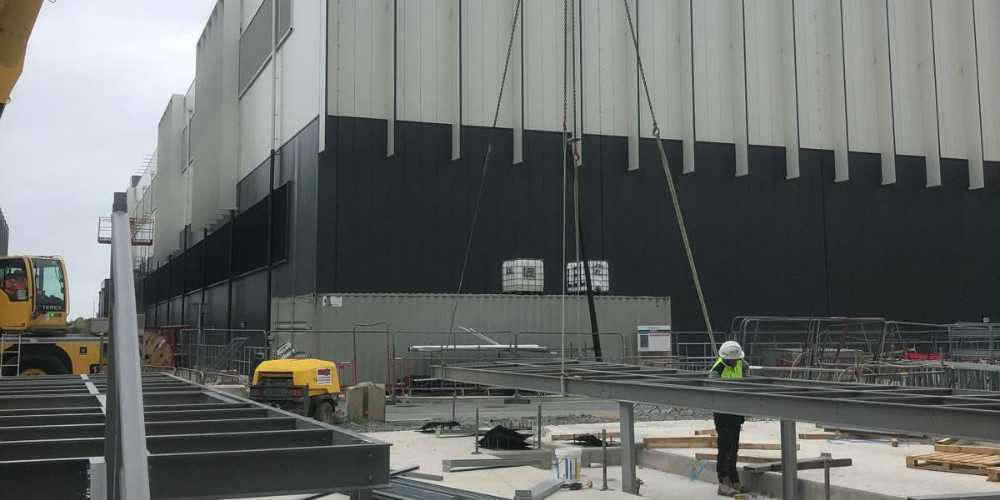
Modular Construction Helps Reduce Site Labour Requirements
Labour shortages continue to affect construction projects across the UK and Europe.
Modular construction can help reduce labour demands by simplifying installation processes and reducing the amount of specialist fabrication work carried out on-site.
Lightweight GRP access systems further support this by:
- simplifying handling
- reducing manual lifting requirements
- improving installation flexibility
- reducing dependence on specialist lifting equipment
This can be particularly valuable on rooftops, elevated structures, and constrained infrastructure sites where access is limited.
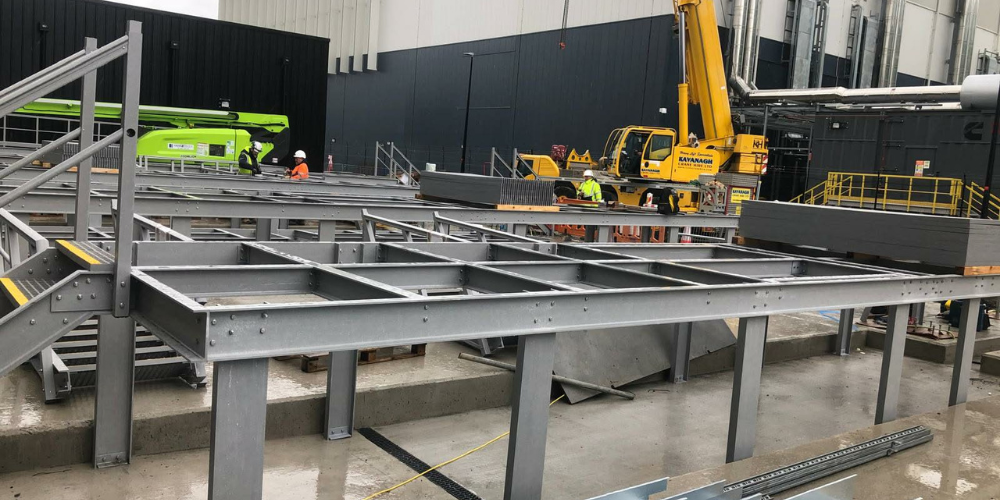
Improved Safety Through Modular Construction Methods
Health and safety performance is a major priority across infrastructure projects.
Traditional installation methods involving welding, cutting, grinding, and heavy lifting can introduce additional site risks.
Modular construction helps reduce many of these activities by shifting fabrication work off-site into controlled manufacturing environments.
For modular GRP access systems, this can help reduce:
- prolonged working-at-height activities
- complex lifting operations
- site congestion during installation
Simplifying installation processes can contribute to safer and more controlled construction environments overall.
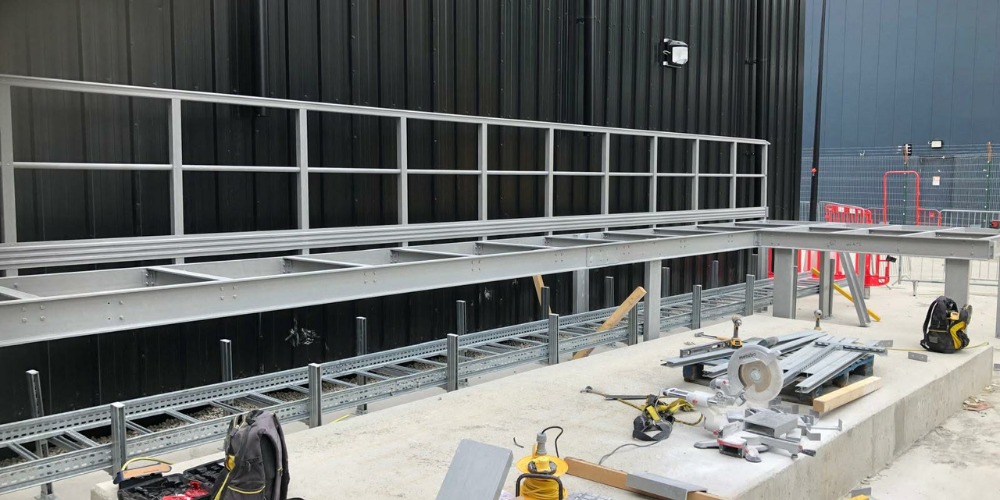
Why GRP Access Systems Support Modular Construction
Material selection plays an important role in the effectiveness of modular construction.
Heavy traditional materials can still create logistical and installation challenges even when systems are modularised.
This is one reason why GRP access systems are increasingly specified across infrastructure projects.
GRP access platforms and walkways are lightweight, corrosion resistant, and well suited to modular construction methods.
Compared with heavier traditional materials, GRP systems can help:
- reduce transportation demands
- simplify lifting and handling
- improve installation speed
- reduce structural loading
- support efficient assembly on-site
- do not need a hot works permit
For infrastructure projects involving rooftops, utilities, rail environments, and industrial facilities, lightweight modular systems can provide important practical advantages.
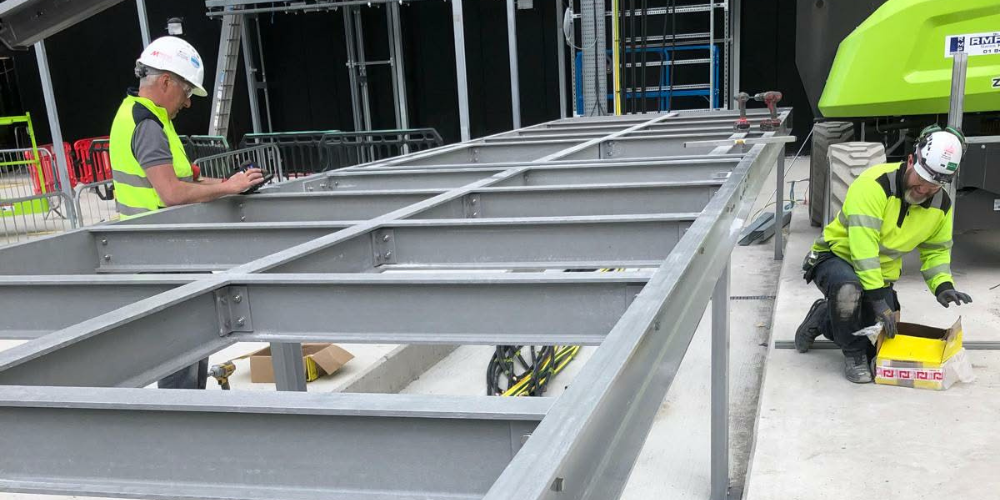
Off-Site Manufacturing Improves Construction Consistency
A key advantage of modular construction is the use of controlled factory manufacturing environments.
Off-site manufacturing can help improve:
- dimensional accuracy
- production consistency
- quality control
- installation predictability
Factory-based production also helps reduce exposure to weather delays and site disruption during fabrication.
For GRP access systems, this means components can arrive ready for installation while maintaining consistent quality standards across large-scale infrastructure projects.
At Relinea, our modular GRP systems are manufactured and designed to support coordinated installation within complex construction programmes. Everything is pre-fabricated on site at our premises in Crumlin, Northern Ireland, before being shipped off to site in modular components.
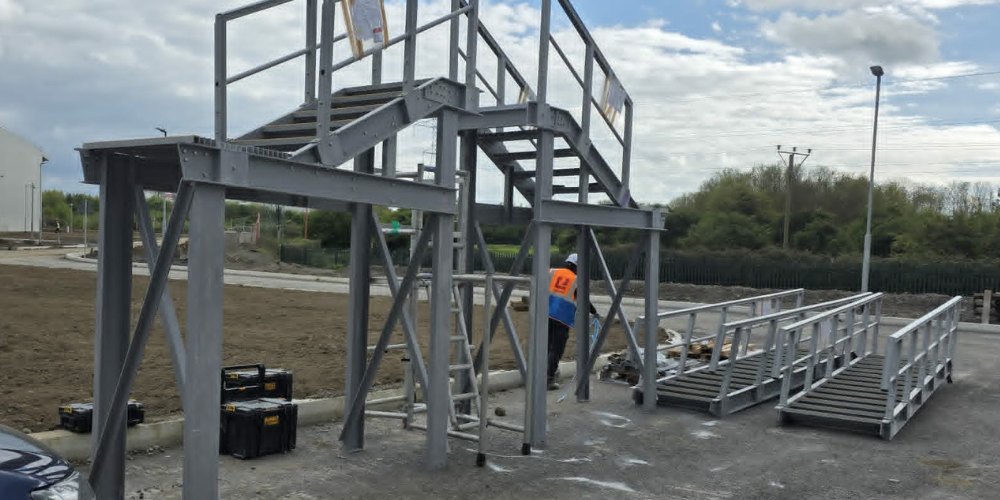
Modular Construction Supports Long-Term Infrastructure Performance
Construction efficiency is not only about installation speed.
Increasingly, project teams are focused on whole-life performance, durability, and long-term maintainability.
Modular GRP access systems support these objectives through:
- corrosion resistance
- low maintenance requirements
- long service life
- modular adaptability
- reduced replacement frequency
Relinea’s GRP access platforms are designed with a 50+ year design life, helping support long-term infrastructure performance across demanding environments.
Relinea also has an independently verified Environmental Product Declaration (EPD) for its access platforms, supporting transparent environmental assessment and lifecycle evaluation within infrastructure projects.
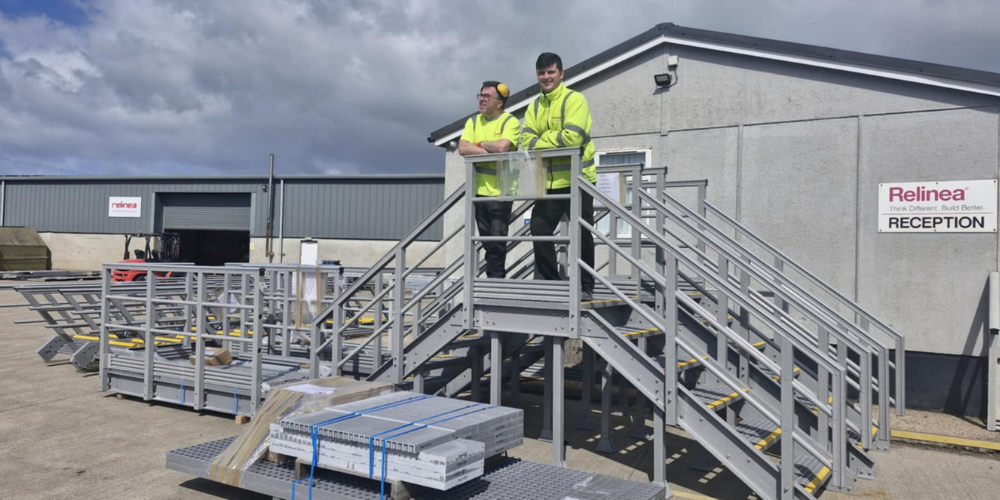
The Future of Modular Construction in Infrastructure
As infrastructure projects continue to increase in complexity, modular construction is likely to become an increasingly important part of modern project delivery.
Developers, contractors, and consultants are under growing pressure to improve:
- installation efficiency
- labour productivity
- programme certainty
- safety performance
- sustainability outcomes
Modular GRP access systems align closely with these priorities by combining:
- lightweight construction
- efficient installation
- long-term durability
- corrosion resistance
- adaptable design
For modern infrastructure projects, modular construction is no longer simply an alternative building method. It is becoming an increasingly important strategy for delivering safer, faster, and more coordinated construction outcomes.