Understanding Load, Deflection & Structural Behaviour in GRP Profiles
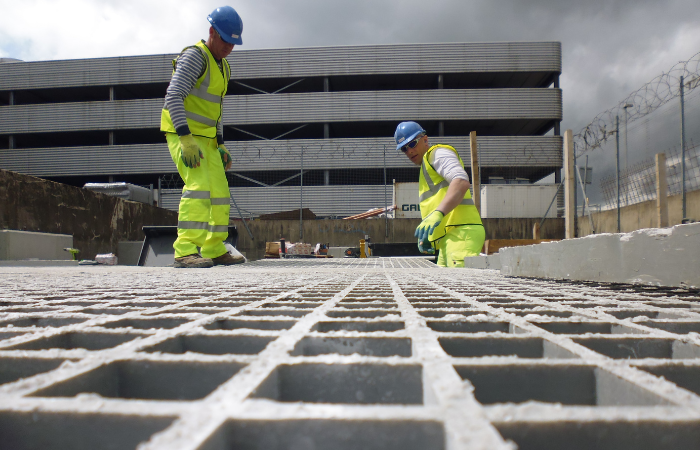
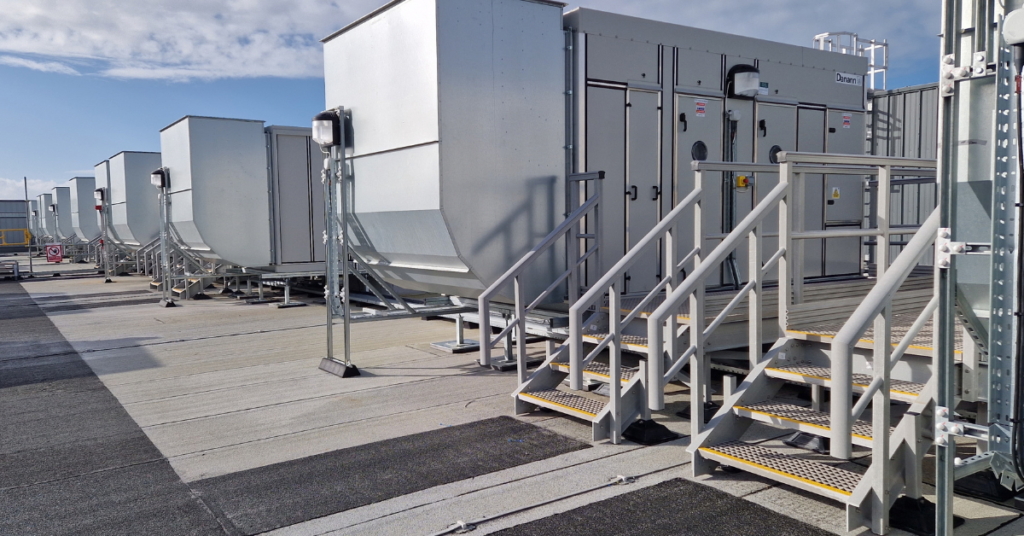
Glass Reinforced Plastic (GRP) is becoming one of the most popular alternatives to traditional materials like steel, timber and aluminium in infrastructure, rail, water and industrial projects. Its lightweight design, corrosion resistance, and durability make it a strong choice for walkways, platforms, staircases and more.
But for engineers and designers, it’s essential to understand how GRP structural profiles behave under load, how deflection impacts performance, and what factors to consider during specification.
What Makes GRP Structural Profiles Different?
Unlike steel, which has uniform properties in every direction, GRP is anisotropic. This means its strength and stiffness vary depending on the fibre orientation and resin system used during manufacturing.
- Directional strength – performance depends on how fibres are aligned.
- Lower stiffness than steel – deflection must be checked more carefully.
- Creep behaviour – GRP can deform slowly under sustained loads if not properly designed.

Load Capacity in GRP Profiles
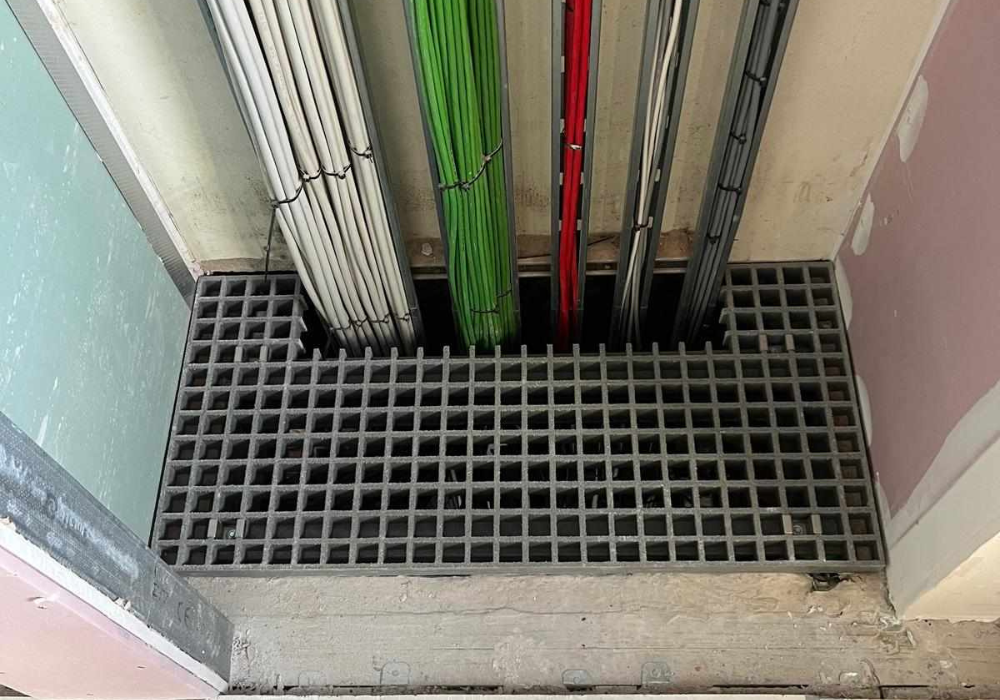
When designing with GRP beams, gratings, and handrail systems, engineers look at properties such as:
- Ultimate tensile strength
- Flexural strength
- Modulus of elasticity (E-modulus)
Key design considerations include:
- Load capacity depends on fibre alignment and resin quality, not just profile thickness.
- Safety factors are higher in GRP than steel due to variability in fibre distribution.
- Long-term creep under constant loading must be factored into designs.
Deflection in GRP – The Critical Factor
Even if a GRP profile is strong enough, deflection (flexing under load) often controls the design.
- Engineers typically use limits such as span/200 or span/250.
- The E-modulus of GRP (approx. 20 GPa) is far lower than steel (~200 GPa), so deflection is more pronounced.
- Creep deflection can increase over time, so it’s vital to model both instantaneous and long-term behaviour.


How GRP Structural Profiles Behave in Practice
Well-designed GRP systems deliver long-lasting, safe performance. Common behaviours include:
- Elastic recovery – GRP returns to its original shape after loads are removed.
- Progressive failure – Unlike brittle steel failure, GRP often shows cracking or fibre pull-out before ultimate collapse, giving visible warning.
- Impact resistance – GRP profiles can withstand sudden loads, making them suitable for industrial and public access applications.
Best Practices for Engineers and Designers
When specifying GRP structural profiles:
- Use tested manufacturer data – not generic material values.
- Apply appropriate safety factors – often higher than metals.
- Check strength and deflection – serviceability often governs GRP design.
- Account for joints and fixings – bolted and bonded joints behave differently than steel.
- Validate critical designs – by using manufacturer load tables or prototype testing.

Frequently Asked Questions (FAQs)
- Why does GRP deflect more than steel?
Because GRP has a lower modulus of elasticity, it flexes more under load compared to steel, even if both have the same load capacity. - Can GRP profiles carry the same loads as steel?
In many cases yes, but the span may need to be reduced, or the section increased to limit deflection. GRP is lighter, corrosion-resistant, and easier to install, often balancing these differences. - Does GRP creep over time?
Yes, creep is a key consideration in long-term loading. This is why correct design, safety factors, and manufacturer data are essential. - What applications are GRP profiles best suited for?
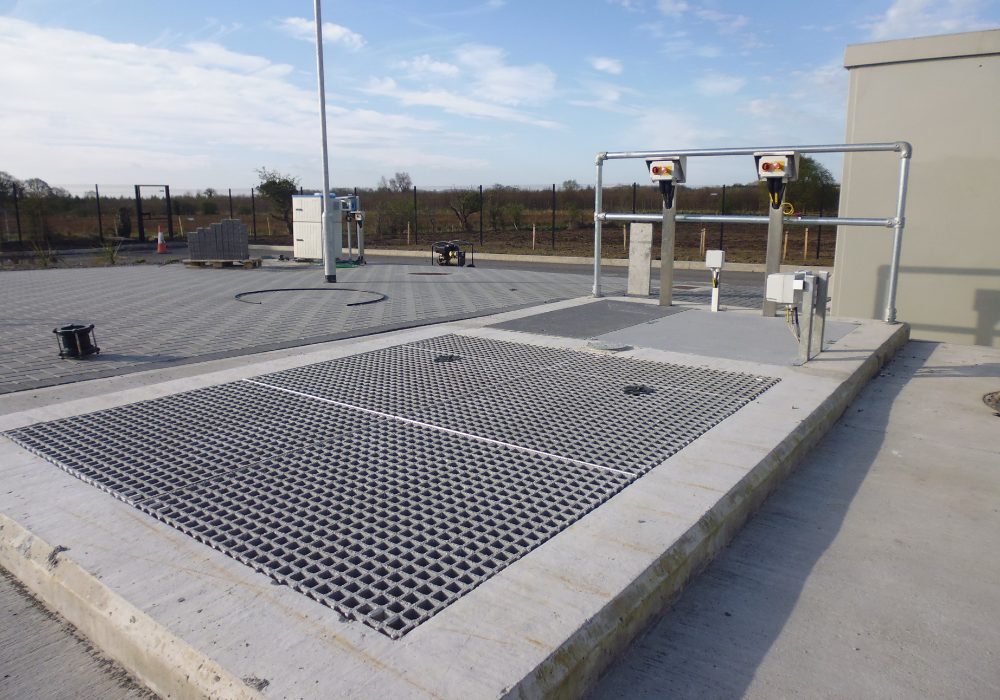
Walkways, platforms, ladders, handrails, trench covers, offshore structures, and anywhere corrosion resistance and low maintenance are critical. - Are GRP profiles cost-effective compared to steel?
Generally speaking, GRP is cheaper than steel, GRP also offers long-term savings due to reduced maintenance, lightweight installation, and corrosion resistance.
Conclusion
GRP structural profiles are a modern, reliable, and sustainable alternative to traditional construction materials. To unlock their full potential, engineers must consider how load, deflection, and long-term behaviour differ from steel or aluminium.
By understanding anisotropy, creep, and serviceability limits, designers can confidently specify GRP systems that perform safely and efficiently for decades.