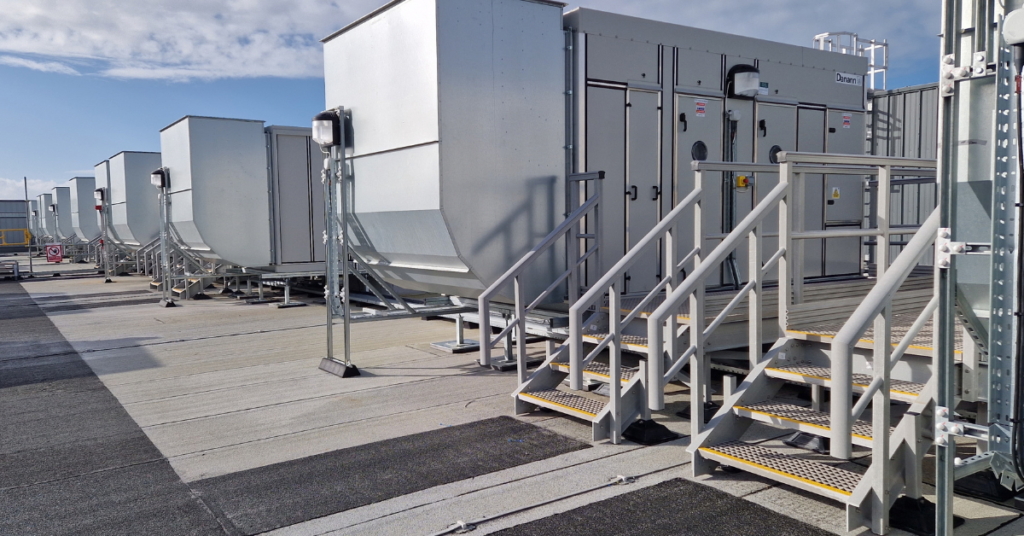
GRP in Electrically Sensitive Environments
GRP grating, platforms, handrails, walkways and structures for substations, power stations, data centres and electrical infrastructure.
GRP is used across a wide range of electrically sensitive environments, including data centres, substations, power stations, electrical compounds and utility infrastructure.
In these environments, access structures need to meet structural and operational requirements while working around electrical equipment. Material selection also needs to consider corrosion, installation, maintenance and the electrical characteristics of the system.
GRP access platforms, GRP walkways, GRP grating, GRP handrails, stairs and structural profiles provide an alternative to conventional metallic materials for a wide range of applications.
The low weight, corrosion resistance and non-metallic construction of GRP make it particularly suited to projects where access needs to be installed around existing electrical equipment or within restricted areas.
Why use GRP in electrically sensitive environments?
Steel has traditionally been used for platforms, walkways, stairs, handrails and other structural applications. GRP for electrical infrastructure provides an alternative where the properties of a non-metallic material offer advantages.
GRP is manufactured from glass fibres combined with a resin system. Unlike steel, it does not provide the same metallic path through the structure.
This makes GRP access systems and structures suitable for applications where the electrical characteristics of the material need to be considered alongside structural and environmental performance.
Typical applications include:
- GRP walkways in substations
- GRP platforms in electrical compounds
- Transformer access platforms
- Switchgear access
- GRP cable trench covers
- GRP walkways in power stations
- Generator access platforms
- GRP access platforms in data centres
- Electrical equipment platforms
- GRP handrails
- GRP stairs and ladders
- Maintenance walkways
The electrical requirements of the installation still need to be established during design, including the relationship between the GRP components, fixings, supporting structure and surrounding electrical equipment.
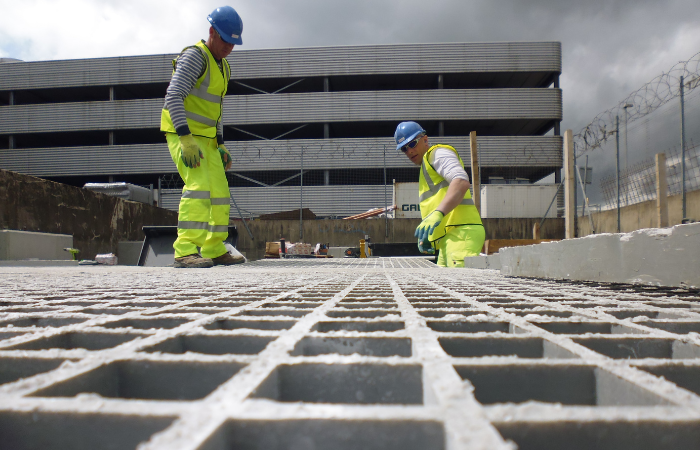
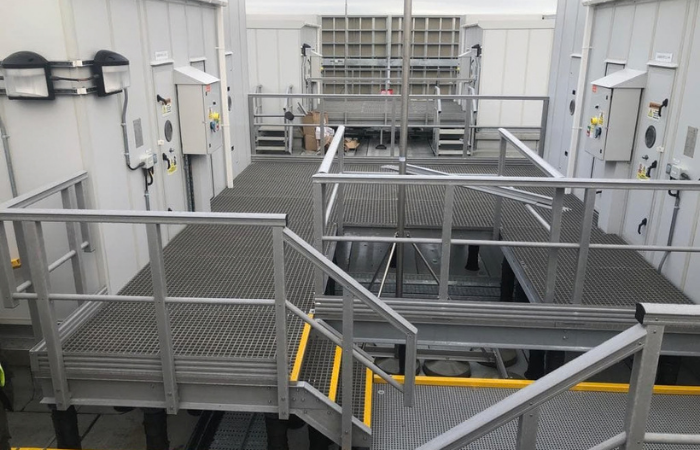
GRP for substations
Substations combine electrical, environmental and operational constraints.
Equipment is often exposed to the weather while personnel need regular access for inspection, operation and maintenance.
GRP for substations is used for:
- Transformer access
- Switchgear platforms
- Operating platforms
- GRP walkways
- Stairs
- Ladders
- GRP handrails
- Cable trench covers
GRP’s corrosion resistance is particularly useful in exposed substation environments. GRP does not rust and does not require the same corrosion protection system as conventional carbon steel.
For existing substations, its low weight is another advantage. Components can be supplied in manageable sections and moved into position without the lifting requirements associated with heavier steel assemblies.
This makes GRP platforms and walkways practical for both new substation construction and retrofit work.
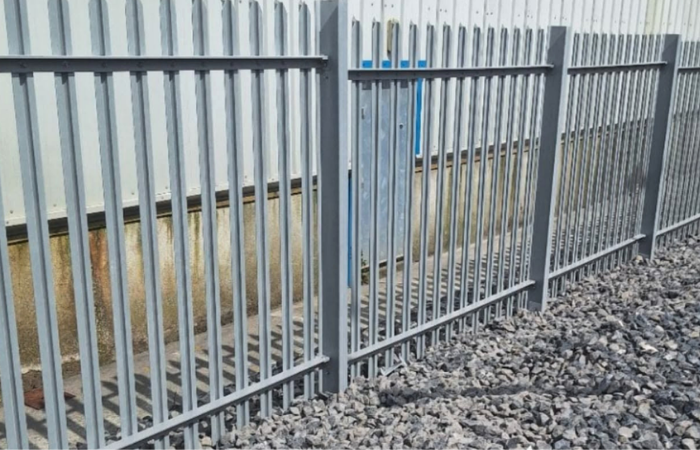
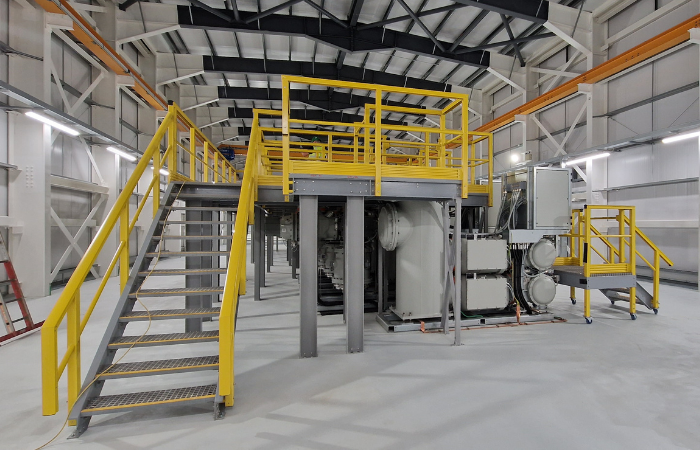
GRP for power stations
Power stations contain large quantities of electrical and mechanical equipment, often with complex access requirements.
New GRP platforms and walkways may need to work around transformers, generators, switchgear, pumps, pipework, cable systems and existing steelwork.
GRP can be designed around these constraints, with bespoke sections manufactured to suit the available space.
Applications include:
- Equipment access platforms
- Maintenance walkways
- Generator access
- Transformer platforms
- Switchgear access
- GRP stairs and ladders
- GRP handrail systems
- Cable and service areas
This is particularly useful for plant modifications and maintenance projects where new access has to be introduced without major disruption to the existing facility.
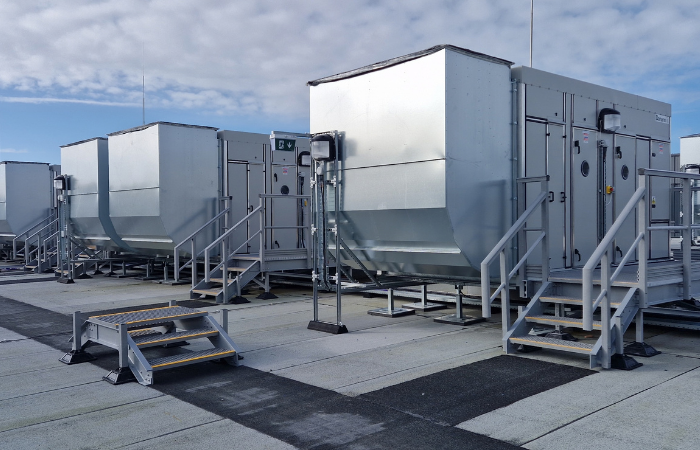
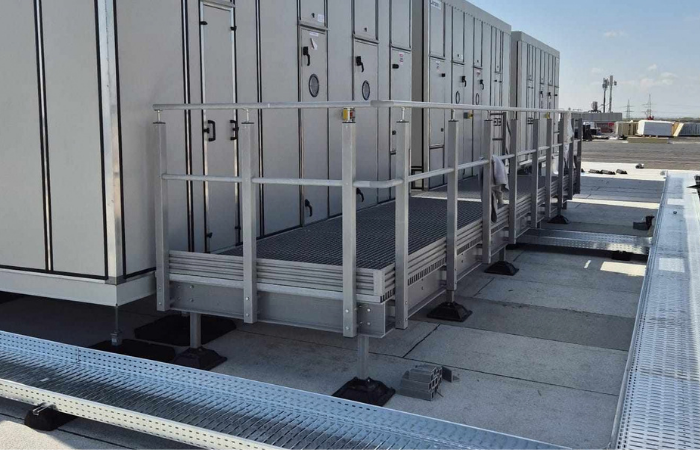
GRP for data centres
Data centres often contain concentrated electrical and mechanical plant within restricted areas.
GRP for data centres can be used for:
- GRP access platforms
- Plant access platforms
- Maintenance walkways
- GRP grating
- GRP handrails
- Stairs
- Ladders
- Equipment platforms
- Bespoke GRP structures
GRP components can be manufactured in manageable sections and moved through existing doors, corridors and service routes before being assembled within the plant area.
Where mechanical connections are used, there is also no requirement for site welding. This avoids introducing welding equipment, sparks and local heat into areas containing sensitive equipment.
Relinea’s GRP access platforms are EPD verified, providing verified environmental product data for project sustainability assessments and specifications.
For data centre projects where embodied carbon and environmental performance are being assessed, this gives the design team a clear source of product-specific environmental information.
GRP grating for electrical infrastructure
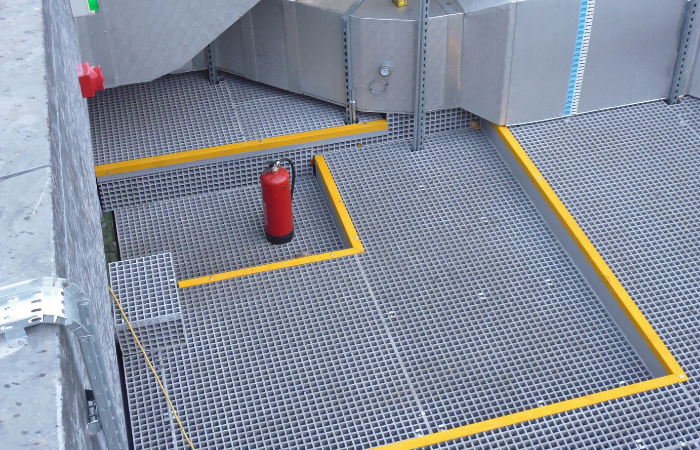
GRP grating provides a durable walking surface for platforms, walkways and operating areas.
The specification should consider:
- Load requirements
- Span
- Grating type
- Surface finish
- Slip resistance
- Resin system
- Fire performance
- Environmental exposure
- Electrical requirements
The open construction of GRP grating allows liquids and debris to pass through the walking surface rather than collecting on top of a solid floor.
Individual grating panels can also be removed where access below the platform is required, making maintenance around cable routes, pipework and equipment easier.
The relatively low weight of GRP grating panels makes them easier to handle during installation and subsequent maintenance.
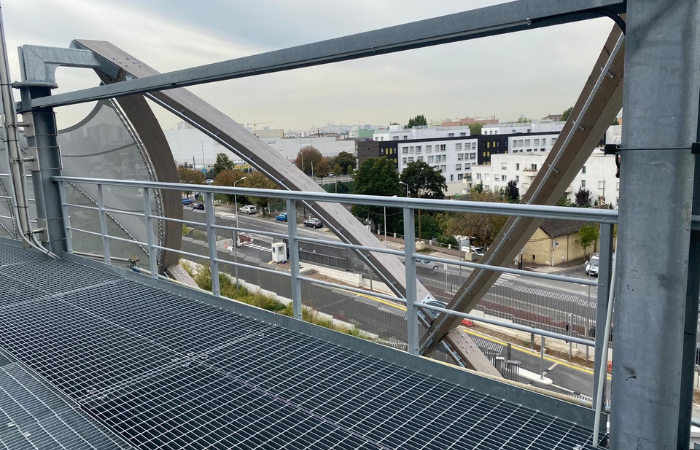
GRP handrails for electrical environments
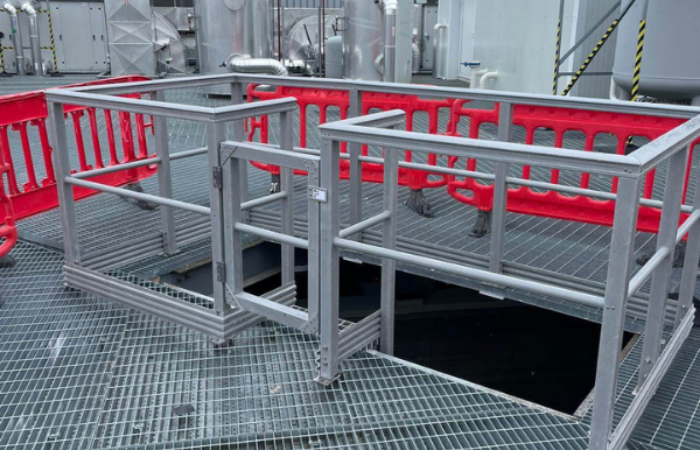
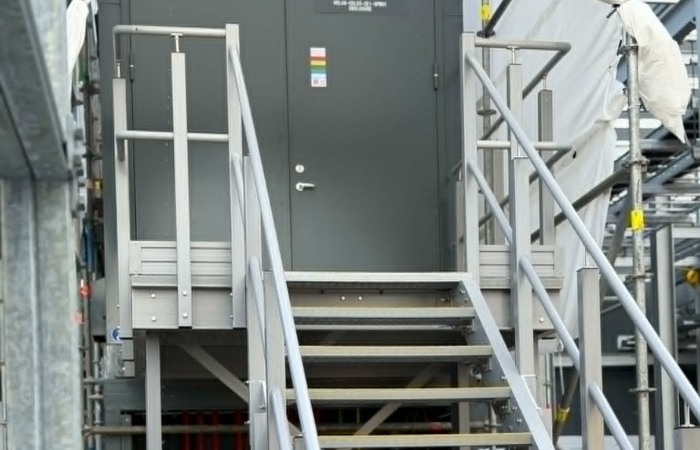
GRP handrails provide edge protection around platforms, walkways, stairs and equipment areas.
A typical GRP handrail system includes:
- Handrails
- Mid-rails
- Posts
- Base connections
- Fixings
- Kick plates where required
GRP handrails are useful where corrosion resistance and the electrical properties of the material need to be considered.
They can also be assembled using mechanical connections, avoiding site welding where the design uses mechanical fixings throughout.
For retrofit work, this simplifies installation where access is restricted or hot work around existing equipment needs to be avoided.
GRP platforms and walkways
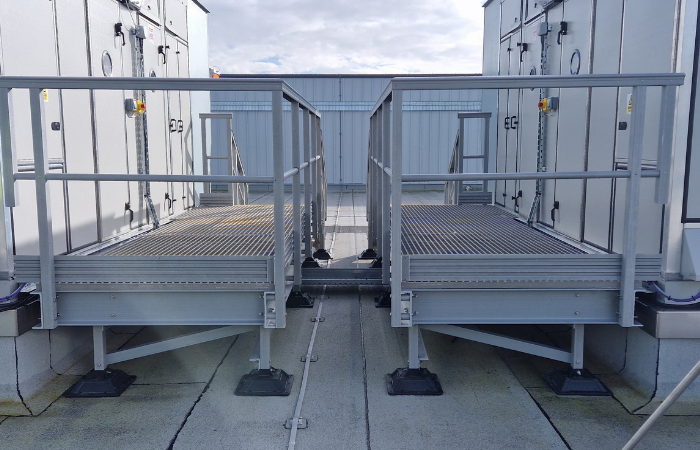
GRP platforms and walkways need to provide safe and practical access for inspection, operation and maintenance.
The design may need to work around:
- Pipework
- Cable trays
- Valves
- Controls
- Existing steelwork
- Electrical equipment
- Component removal requirements
GRP structural profiles allow platforms and walkways to be configured around these constraints.
Bespoke GRP components can be manufactured to suit the required dimensions rather than modifying a standard steel assembly on site. This is particularly useful for retrofit projects where the available space is already defined by existing plant and services.
Low weight and ease of GRP installation
Low weight is one of the most practical advantages of GRP access platforms and structures compared with equivalent steel components it is 75% lighter.
On retrofit projects, materials may need to pass through existing buildings, travel between floors or reach areas where large lifting equipment cannot be used.
GRP components can be supplied in manageable sections and carried to the installation area.
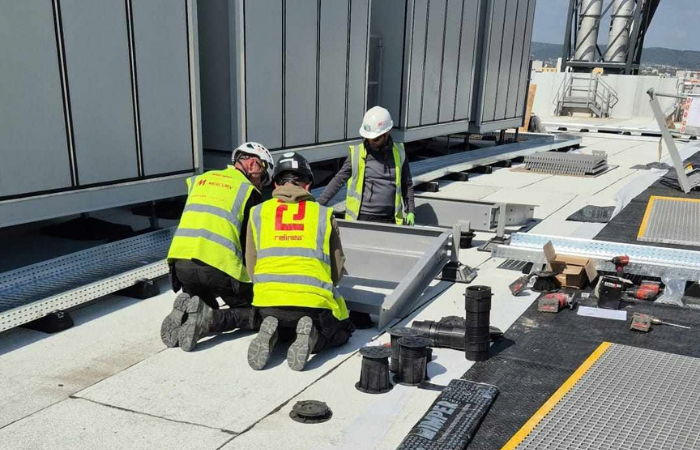
For smaller platforms, walkways and handrail systems, a two-person team can often handle and position the components without a crane, telehandler or other heavy lifting equipment, subject to the size and configuration of the structure.
This reduces the amount of plant brought into the facility and simplifies work in congested areas.
It is particularly useful for:
- Existing substations
- Plant rooms
- Rooftop installations
- Internal data centre areas
- Restricted access locations
- Retrofit projects
- Maintenance works
GRP installation without hot works
GRP also provides an alternative to site-fabricated steelwork.
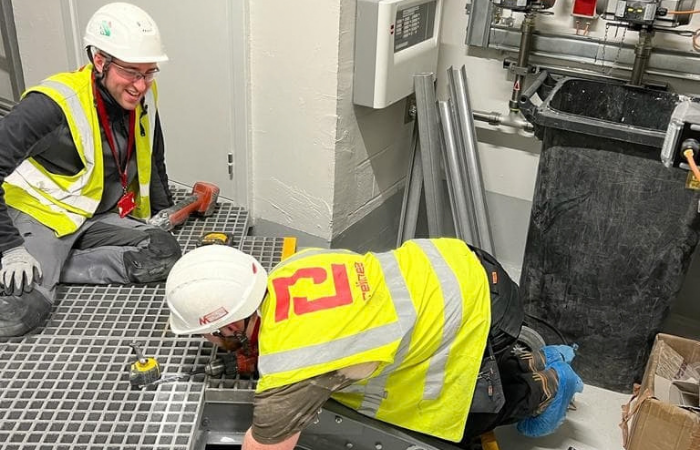
Where the design uses mechanical connections, GRP platforms, walkways and handrails can be cut, drilled and assembled without site welding.
That means no welding equipment, gas bottles, sparks or local heat during installation.
Where no hot work is required, the associated hot works permit and controls are not required, subject to the site’s own permit-to-work system.
This can simplify installation around sensitive electrical equipment and reduce preparation before work starts.
It can also help contractors work within short installation windows. Components arrive ready to assemble, are moved into position and mechanically fixed rather than fabricated and welded on site.
Corrosion resistance of GRP
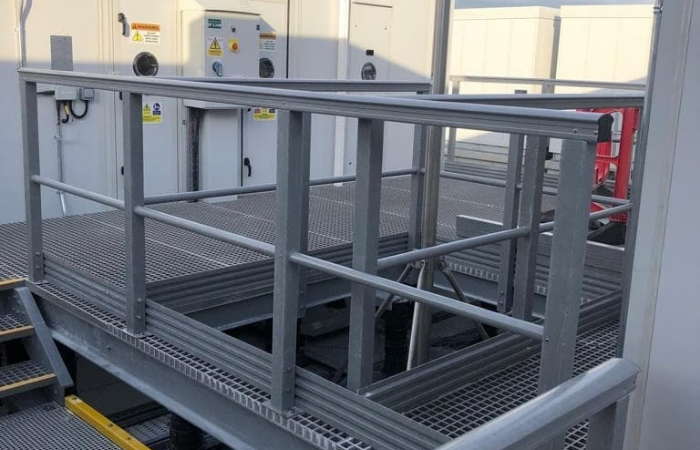
With a 50+ year design life, GRP provides long-term corrosion resistance without the rusting associated with carbon steel.
This is particularly relevant in environments exposed to:
- Moisture
- Condensation
- Chemicals
- Salt
- Industrial atmospheres
- Outdoor weather
- UV exposure
Substations, power stations and utility infrastructure can all contain areas where conventional steel requires galvanising, painting or other corrosion protection.
The GRP resin system is selected to suit the environmental exposure, providing a material that does not require the same corrosion protection regime as carbon steel.
This will eliminate corrosion-related maintenance over the service life of the installation.
What should be considered when specifying GRP?
The specification should cover the complete installation rather than simply specifying “GRP”.
Key considerations include:
- GRP material and resin system
- Structural loading
- Electrical properties
- Grating type
- Slip resistance
- Fire performance
- Environmental exposure
- Supporting structure
- Fixings
- Handrails
- Installation method
- Testing
- Certification
Project-specific requirements relating to separation, bonding, earthing and electrical clearances should also be identified.
For projects with sustainability requirements, the availability of verified environmental product data should also be considered. Relinea’s GRP access platforms are EPD verified.
GRP for new build and retrofit projects
GRP is suitable for both new construction and retrofit applications.
On new projects, GRP access platforms, walkways and structures can be incorporated into the design from the outset, allowing the structure, access routes and fixing arrangements to be coordinated with surrounding plant.
Retrofit work presents different challenges. Existing equipment, steelwork, cable routes and services already determine the available space, while installation may need to take place during a short shutdown or maintenance window.
GRP components can be manufactured to suit these constraints and supplied as manageable sections for assembly on site.
The ability to install without heavy lifting equipment or site welding can simplify the logistics of working within an existing operational facility.
GRP for electrically sensitive environments
GRP provides a practical alternative to metallic materials for a wide range of electrical infrastructure applications.
GRP grating, GRP handrails, GRP platforms, GRP access platforms, GRP walkways, GRP stairs and GRP structural profiles are used where corrosion resistance, low weight and the electrical characteristics of the material are important.
The installation benefits are equally relevant. Lightweight components can be moved into restricted areas with small installation teams, while mechanical assembly can remove the need for site welding and associated hot work controls.
For projects where environmental performance is part of the specification, Relinea’s EPD-verified GRP access platforms provide verified environmental product data alongside the engineering and structural information required for the access solution.
Relinea provides engineered GRP solutions from design and structural calculations through to manufacture, supply and installation, including bespoke GRP platforms, walkways, handrails and structures for new build and retrofit applications.
Main Takeaways:
Like what you see and want to find out more? Get in touch with the Relinea team today.