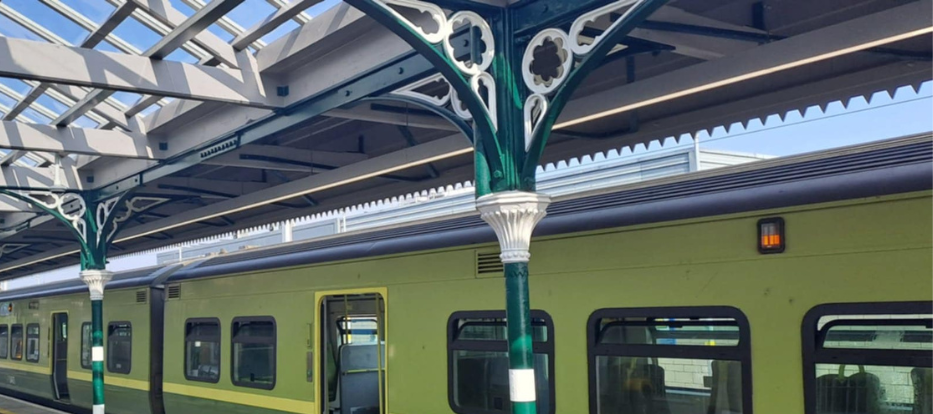
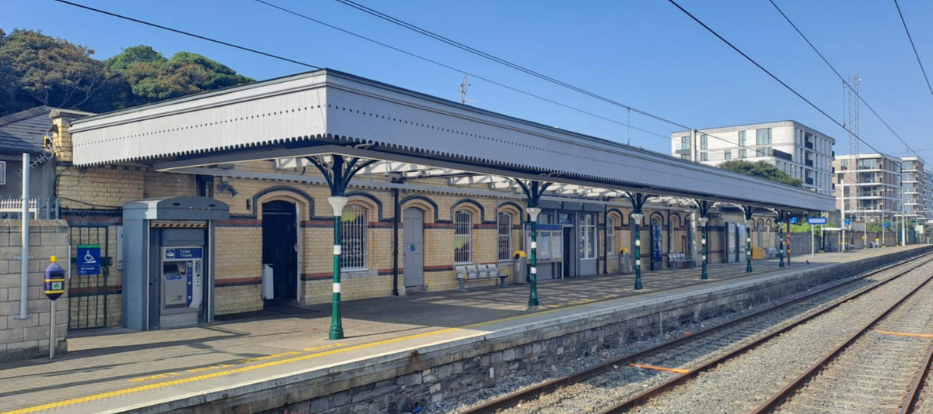
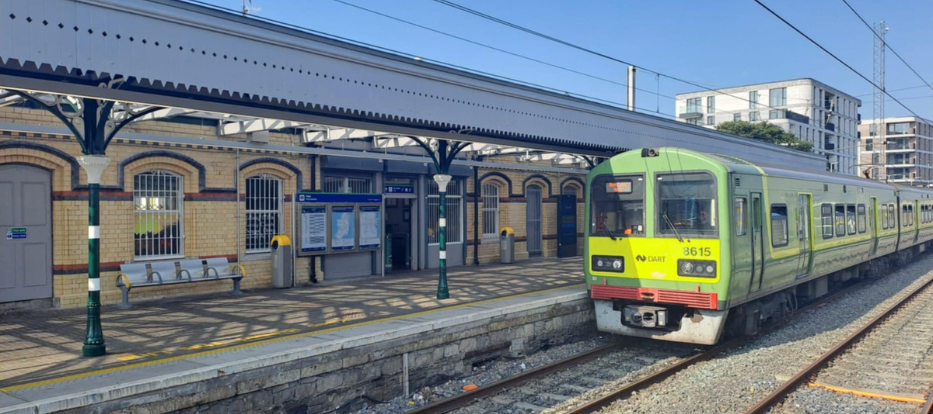
The canopy at Howth Station, a landmark on Ireland’s railway network, has stood since 1898 when it was constructed by the Great Northern Railway Company. Over time, the coastal environment had taken its toll on the historic canopy, with the original cast iron pillars and decorative elements showing significant signs of deterioration. As part of a major restoration effort commissioned by Irish Rail, Relinea was tasked with recreating the daggerboards, the most visually striking feature of the canopy, while preserving their traditional charm. By designing and supplying GRP daggerboards with an authentic timber grain effect, Relinea delivered a solution that blended heritage aesthetics with modern composite performance.
The canopy’s age, combined with the harsh coastal climate, had caused substantial wear to its structural and decorative components. While the restoration team of specialist engineers and architects sought to preserve the station’s historical character, the original daggerboards were no longer fit for purpose.
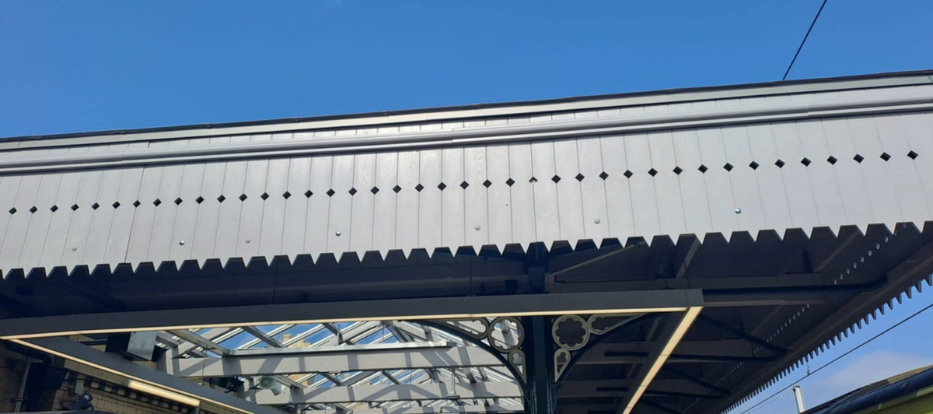
The replacement elements needed to perfectly replicate the intricate design of the originals, including diamond-shaped cut-outs, concealed bolt heads, and a realistic wood grain texture on both sides. At the same time, they had to meet modern safety and durability standards, withstand the coastal environment, and require minimal maintenance over their lifespan.
Solution
Relinea designed and manufactured bespoke GRP daggerboards in 20mm thickness, finished with a highly detailed timber grain effect to replicate the appearance of traditional wooden boards. Using a Class 1 Fire Rated resin, the boards combined visual authenticity with compliance to modern fire safety regulations. Every design detail, from the precise cut-outs to the concealed fixings, was faithfully reproduced to preserve the historical integrity of the canopy.
The use of GRP offered a range of advantages over timber, particularly in a coastal railway environment. The boards are lightweight, making them easy to handle and install, yet incredibly strong and impact-resistant. They are non-conductive, an important safety consideration for railway infrastructure, and completely resistant to corrosion, rot, and moisture damage, ensuring they will retain their structural integrity and appearance for many years. Unlike traditional wood, they require virtually no ongoing maintenance, eliminating the need for frequent painting or treatment.
By marrying heritage design with modern composite technology, Relinea delivered a solution that not only restored the canopy’s original character but also provided Irish Rail with a long-lasting, low-maintenance upgrade. The renewed daggerboards now stand as a testament to Howth Station’s history while ensuring it can continue to welcome passengers for generations to come.