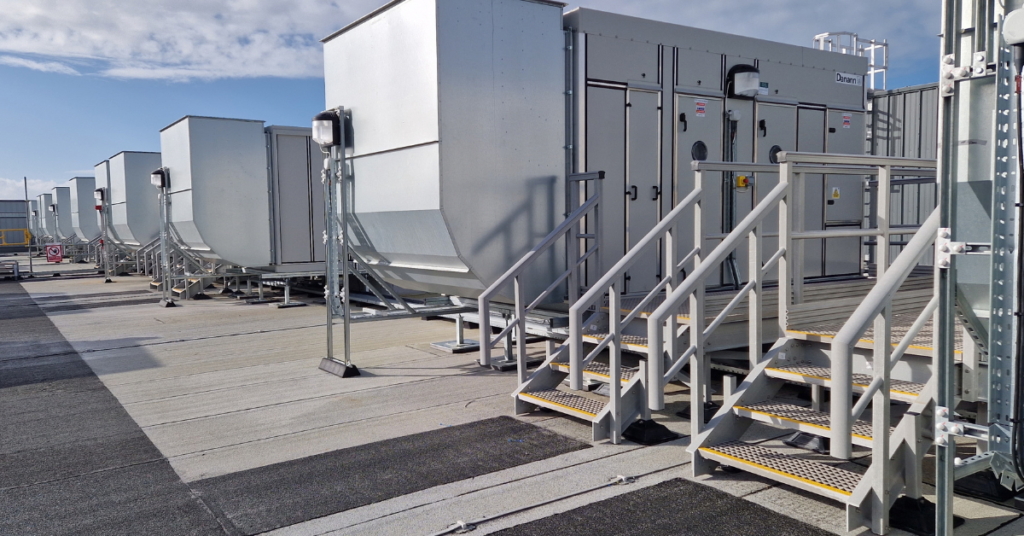
Is GRP Really Sustainable? The Environmental Case for Glass Reinforced Plastic
Understanding the environmental benefits of GRP across its lifecycle
As construction and infrastructure projects increasingly focus on reducing carbon emissions, minimising waste and improving whole-life performance, material selection has become an increasingly important part of sustainable design.
But where does GRP (Glass Reinforced Plastic) fit into this?
GRP is a composite material that combines glass fibre reinforcement with a polymer resin. While its environmental impact needs to be assessed across its complete lifecycle, GRP can offer significant sustainability advantages in demanding infrastructure applications through its long service life, corrosion resistance, low maintenance requirements and lightweight construction.
Relinea has developed this guide to help engineers, designers, architects, contractors and asset owners understand the environmental case for GRP and how it can contribute to more sustainable infrastructure.
Download the GRP Sustainability Guide
Our detailed guide, “Is GRP Really Sustainable? The Environmental Case for Glass Reinforced Plastic”, explores the sustainability of GRP from a whole-life perspective.
Read the full guide below
Download the PDF HERE.
Why Does GRP Have a Sustainability Case?
The sustainability of a construction material should not be judged solely by its manufacturing process.
A more complete assessment considers what happens throughout the life of the finished product — including manufacturing, transportation, installation, maintenance, replacement and end-of-life.
This is particularly important for infrastructure that operates in harsh environments.
GRP can offer several characteristics that contribute to its whole-life environmental performance.
Long service life
GRP products can provide decades of service when correctly designed, specified and installed. A long-lasting structure can reduce the need for replacement materials and the environmental impacts associated with repeated manufacturing, transportation and installation.
Corrosion resistance
GRP does not rust and can provide excellent resistance to many aggressive environments. This can reduce the requirement for corrosion protection, repainting and replacement in applications where conventional materials are exposed to moisture, chemicals or salt.
Low maintenance
GRP access structures can require minimal ongoing maintenance compared with materials that require regular protective coatings or corrosion treatment.
Reducing maintenance can also reduce the associated use of materials, transport, labour and site activity.
Lightweight construction
GRP’s high strength-to-weight ratio can result in significantly lighter structures, it is 75% lighter than steel.
This can provide potential benefits during transportation, handling and installation, particularly where access is restricted or heavy lifting equipment would otherwise be required.
Whole-life performance
The environmental impact of a product should be considered alongside its expected service life and maintenance requirements.
For many infrastructure applications, GRP’s combination of durability, corrosion resistance and low maintenance makes it an important material to consider when developing a whole-life sustainability strategy.
GRP and Environmental Product Declarations
Sustainability claims are increasingly expected to be supported by measurable environmental information.
An Environmental Product Declaration (EPD) provides independently verified environmental information about a specific product based on Life Cycle Assessment.
Relinea has achieved a third-party verified EPD for its GRP Access Platforms, providing environmental information that can support engineers, designers, contractors and asset owners when assessing the environmental performance of GRP solutions.
The EPD approach is important because it moves the conversation away from generic claims about whether a material is “green” and towards measurable, product-specific environmental data.
Find out more about the Relinea EPD
View the GRP Access Platform EPD
GRP Sustainability and Whole-Life Carbon
When comparing construction materials, it is important to look beyond the initial manufacturing stage.
A whole-life assessment can consider factors including:
- Raw material production
- Manufacturing
- Transportation
- Installation
- Maintenance
- Replacement
- End-of-life
For GRP access structures, factors such as low weight, corrosion resistance, durability and reduced maintenance can all be relevant to the overall environmental assessment.
The correct material choice will always depend on the specific application, design, environment and lifecycle assessment.
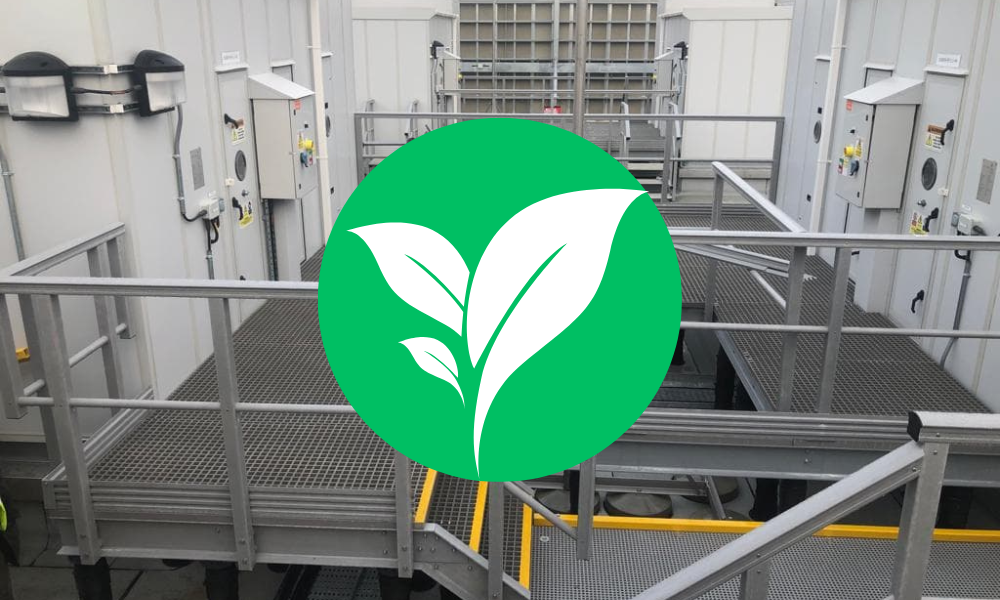
Is GRP More Sustainable Than Steel?
Steel is a highly established structural material and can be the appropriate choice for many applications.
However, in environments where corrosion, maintenance, weight and service life are significant considerations, GRP can provide an alternative with different whole-life characteristics.
A meaningful comparison should consider the complete engineered solution, rather than simply comparing the raw materials.
Factors to consider include:
| Sustainability consideration | GRP |
|---|---|
| Corrosion resistance | Excellent |
| Protective coatings | Generally not required for corrosion protection |
| Maintenance | Typically low |
| Weight | Lightweight |
| Transportation | Lower weight can reduce transport impacts |
| Installation | Lightweight construction can simplify handling |
| Service life | 50+ years |
| Environmental data | Product-specific EPD available for Relinea GRP Access Platforms |
The detailed guide explores these factors in greater depth.
GRP for Sustainable Infrastructure
GRP is particularly relevant to infrastructure where long service life and resistance to demanding environments are important.
Applications include:
- Water and wastewater treatment
- Pumping stations
- Rail infrastructure
- Electrical infrastructure
- Substations
- Data centres
- Industrial facilities
- Chemical environments
- Marine and coastal infrastructure
- Commercial construction
These applications can place significant demands on access structures and equipment.
Using durable, corrosion-resistant materials can help reduce maintenance and extend the useful life of infrastructure.
Sustainability at Relinea
Sustainability is not limited to the materials used in a finished product.
Relinea’s approach includes sustainability across its design, manufacturing and supply chain activities, including waste reduction, manufacturing efficiency, lifecycle assessment and responsible procurement.
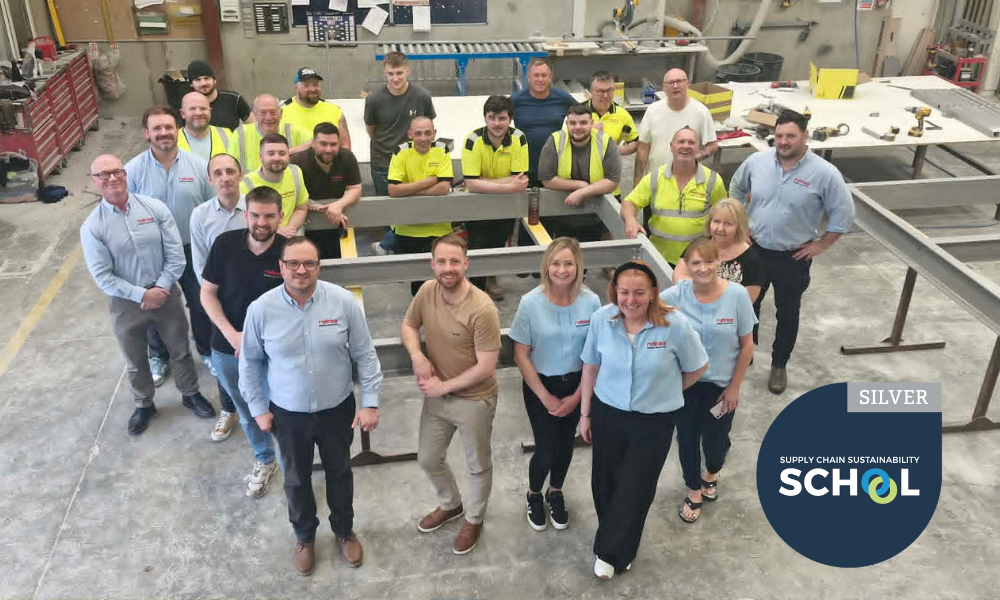
Relinea also holds Silver Membership of the Supply Chain Sustainability School, supporting its ongoing work around environmental sustainability, carbon reduction, responsible sourcing and continuous improvement.
Read Relinea’s Full Sustainability Report
The guide available on this page provides an introduction to the environmental case for GRP.
For a more detailed look at Relinea’s approach to sustainability, environmental performance, lifecycle assessment and the wider benefits of GRP, visit our dedicated sustainability resource:
Read the full Relinea Sustainability of GRP report →
This provides a deeper resource for customers, engineers, specifiers and procurement teams evaluating GRP as part of a sustainable infrastructure strategy.
Looking for a Sustainable GRP Solution?
Relinea designs, manufactures and installs GRP access platforms, walkways, stairs, handrails, structural profiles and bespoke GRP structures for infrastructure and industrial applications across the UK, Ireland and Europe.
Talk to Relinea about your project →
GRP vs Steel: Is Corrosion Still Costing the Construction Industry Billions?